Back to blog
Top 8 WooCommerce Alternatives to Build Your Online Store
Discover the best WooCommerce alternatives to build and manage your online store with less maintenance, stronger support & built-in e-commerce tools.

Feb 23 2026
WooCommerce powers 6.5 million online stores worldwide and holds over 30% of the global e-commerce platform market. The open-source WordPress plugin offers complete customization freedom and no monthly platform fees beyond hosting costs.
However, this flexibility comes with technical responsibilities. Store owners manage everything from security updates and plugin compatibility to server optimization and backup systems. For merchants who want to focus on products and customers rather than on technical maintenance, there may be more suitable alternatives.
This guide examines eight platforms that provide complete e-commerce functionality, managed infrastructure, built-in features, and professional support teams.
Why Users Are Looking for WooCommerce Alternatives
WooCommerce is often chosen for its flexibility and zero platform fees. For store owners comfortable with WordPress and willing to manage their own hosting, it offers deep customization without monthly software costs.
Over time, however, common friction points emerge. Merchants report plugin conflicts that break checkout without warning, clunky interfaces that require constant troubleshooting, and performance issues that directly impact sales. The platform's reliance on extensions for basic e-commerce functions creates ongoing maintenance work that shifts focus away from running the business.
When urgent issues arise, such as payment processing failures, support comes through AI chatbots and documentation rather than direct human assistance, leaving merchants to troubleshoot critical problems on their own.
Payment delays present additional challenges. WooCommerce Payments sometimes holds funds for weeks, citing vague policy reasons, disrupting cash flow for businesses that need reliable processing.
Because of this, many users look for alternatives that automatically handle infrastructure, include essential features natively, and provide direct support when issues arise.
8 Best WooCommerce Alternatives to Build Your Online Store
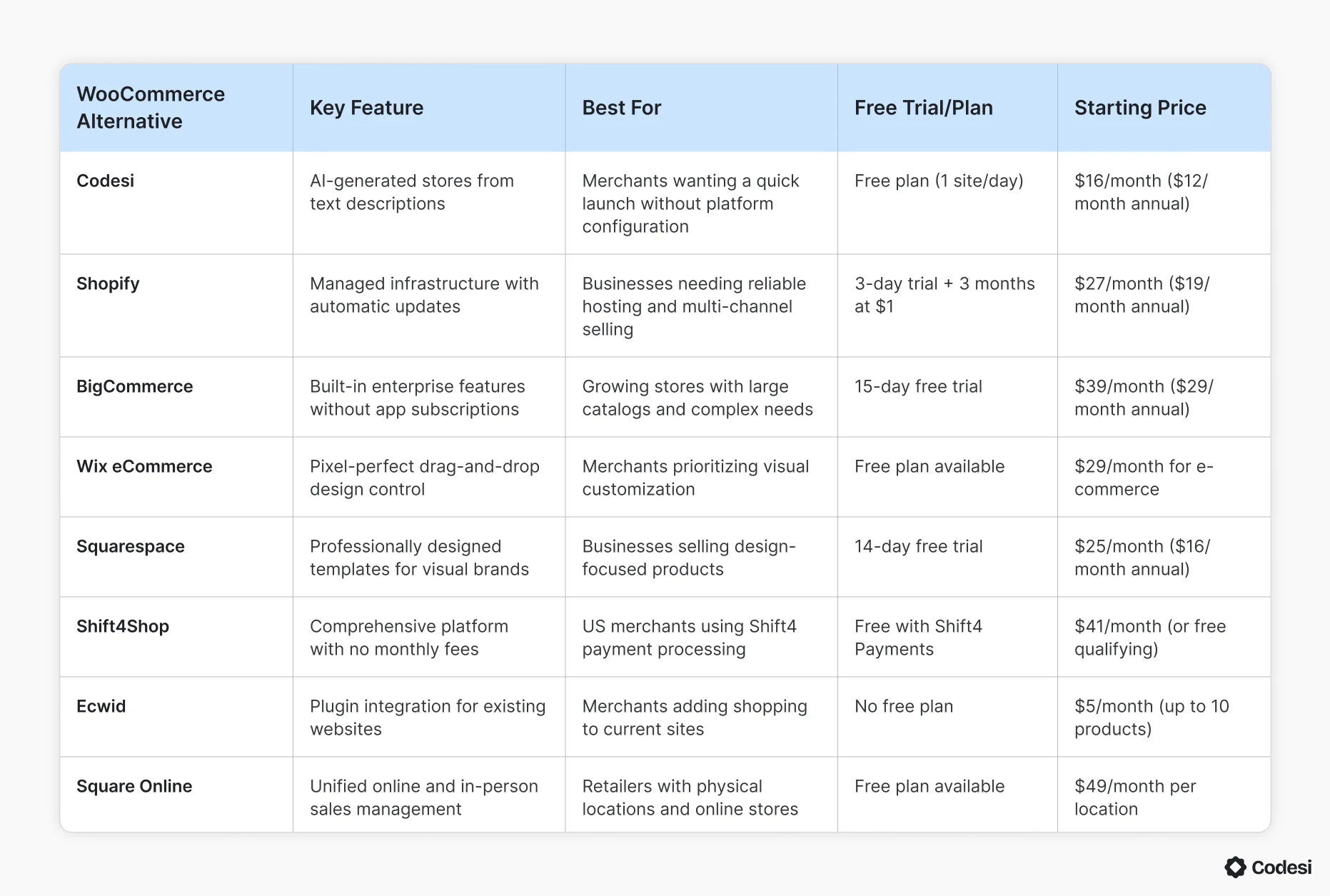
Choosing the right e-commerce platform depends on your technical skills, budget, and growth plans. The comparison table below highlights key differences to help you identify which alternative best fits your store's needs.
1. Codesi
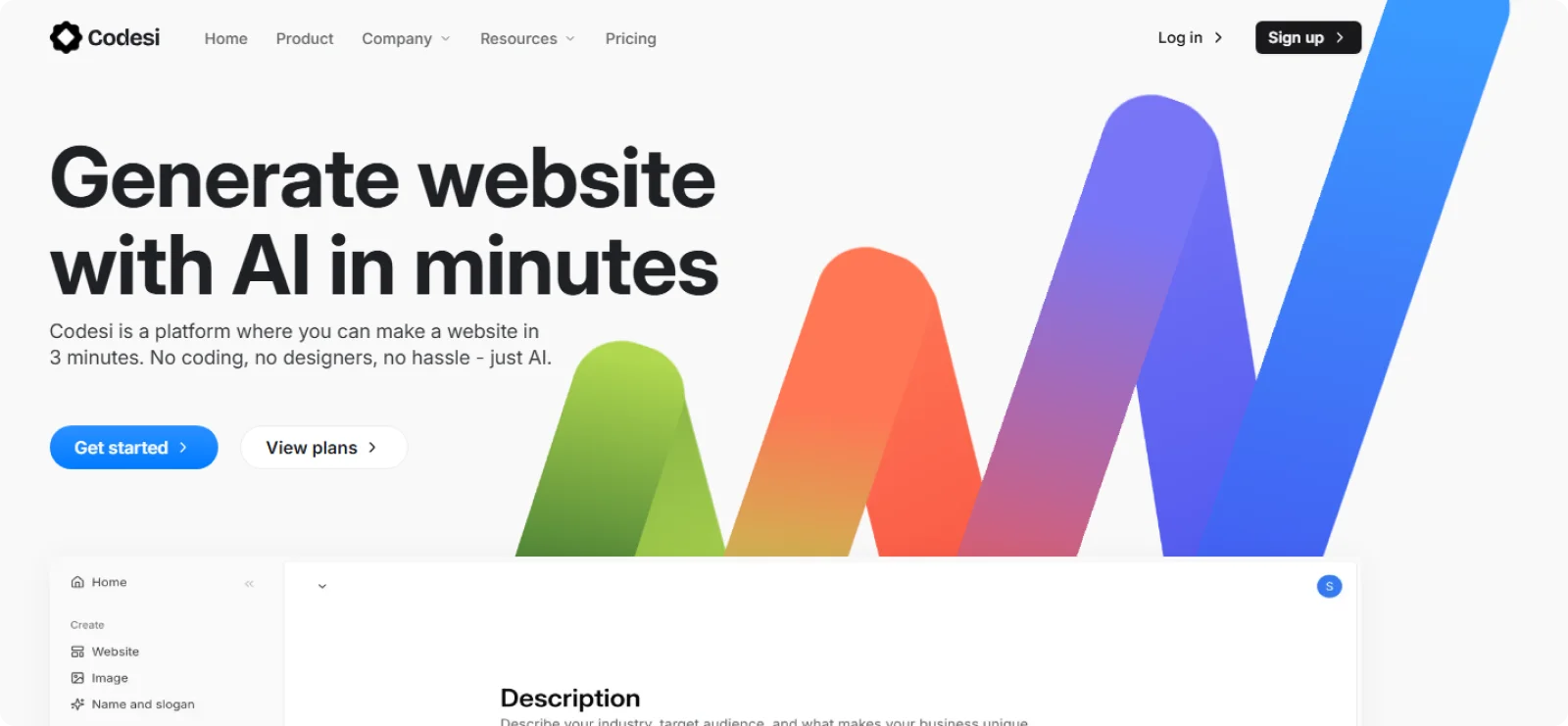
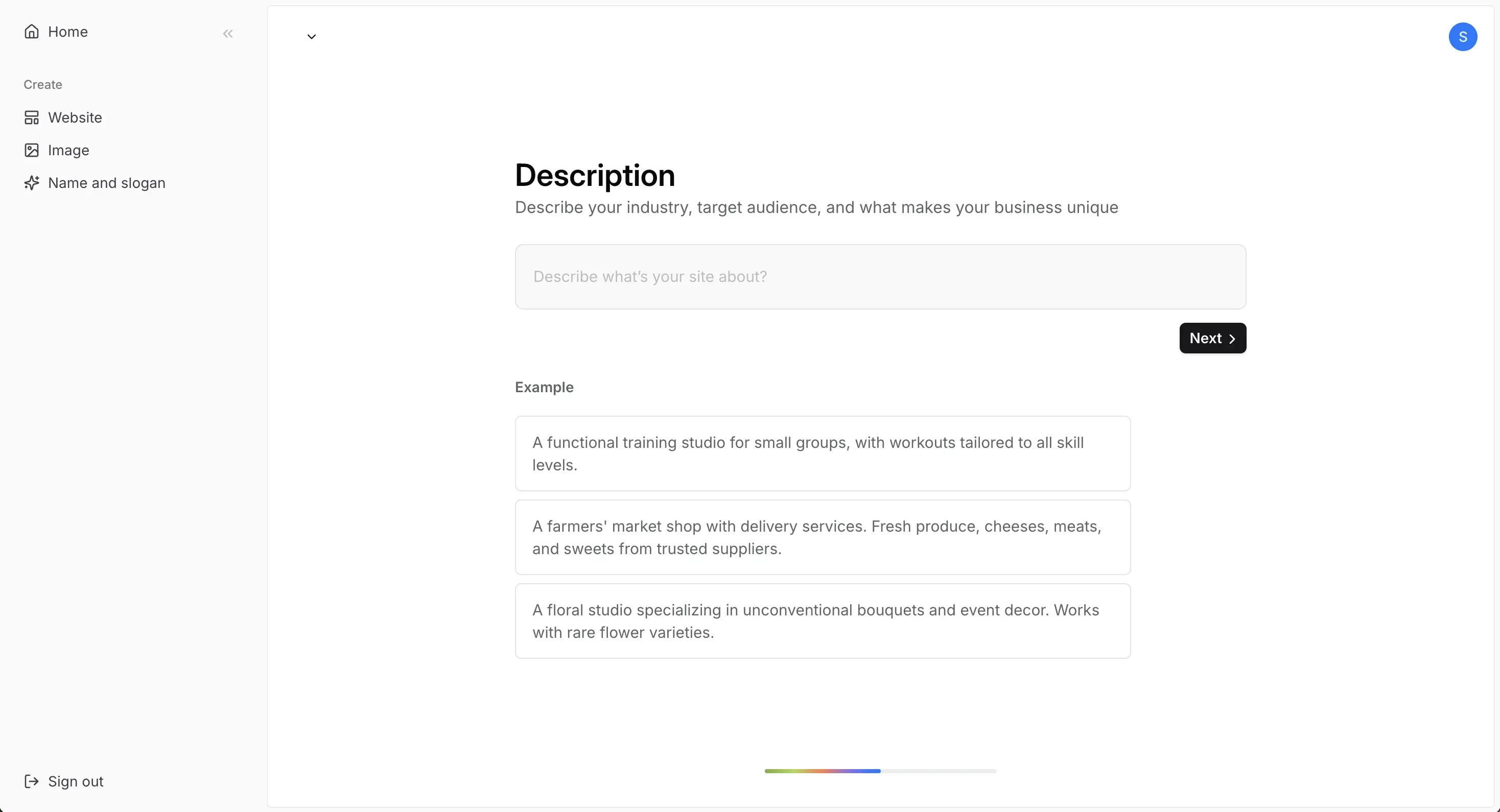
Codesi targets merchants who want to launch online stores quickly without configuring e-commerce platforms or learning complex builders. You describe your products and business in simple terms, and the platform generates complete storefronts ready for customization and launch.
Key Features
- AI site generation from text descriptions: Create a complete e-commerce site by describing products, target customers, and business models without having to select templates or configure settings manually.
- Visual customization after generation: Modify layouts, update product information, adjust colors and fonts, and rearrange sections through a point-and-click interface.
- Automated hosting and SSL setup: Generate stores that include hosting infrastructure and automatically configured security certificates.
- Mobile-responsive design output: Get mobile-responsive sites that adapt to smartphones and tablets without manual optimization.
- Quick iteration and regeneration: Test different store concepts by generating multiple versions from varied descriptions to find the best fit.
Pros
- Launches functional online stores within minutes from simple product descriptions
- Eliminates the need to learn e-commerce platform interfaces or template systems
- Removes technical setup steps like hosting selection and SSL certificate installation
Cons
- Offers simpler store structures compared to platforms supporting complex product catalogs
- Provides basic customization options rather than granular design control
Pricing
Codesi offers a free plan with one website generation per day. Paid plans start at $16 per month or $12 per month when billed annually.
2. Shopify

Shopify serves merchants who want a managed e-commerce infrastructure without handling server maintenance or security updates. Businesses selling physical products, digital goods, or services use the platform to accept payments, track inventory, and fulfill orders through centralized dashboards.
Key Features
- Hosted e-commerce infrastructure with automatic updates: Manage server security patches, SSL certificates, PCI compliance, and performance optimization without manual intervention.
- Shopify Payments for integrated transactions: Accept credit cards, digital wallets, and local payment methods through a built-in processor.
- Point-of-sale integration for retail locations: Sync online and in-store inventory, process in-person transactions through mobile card readers, and manage customer data across channels.
- Abandoned cart recovery with automated emails: Send customized email sequences to customers who leave items in carts.
- Multi-channel selling across platforms: List products simultaneously on Facebook, Instagram, TikTok, Amazon, and eBay, with inventory synchronization.
Pros
- Launches fully functional stores within hours through guided setup workflows
- Eliminates technical e-commerce management through automatic security updates and infrastructure scaling
- Provides customer support via chat, email, and phone across all subscription tiers
Cons
- Charges additional transaction fees when using third-party payment processors instead of Shopify Payments
- Limits theme customization flexibility
Pricing
Shopify doesn't offer a free plan, but it provides a 3-day trial followed by three months at $1 per month. Paid plans start at $27 per month, or $19 per month when billed annually.
3. BigCommerce
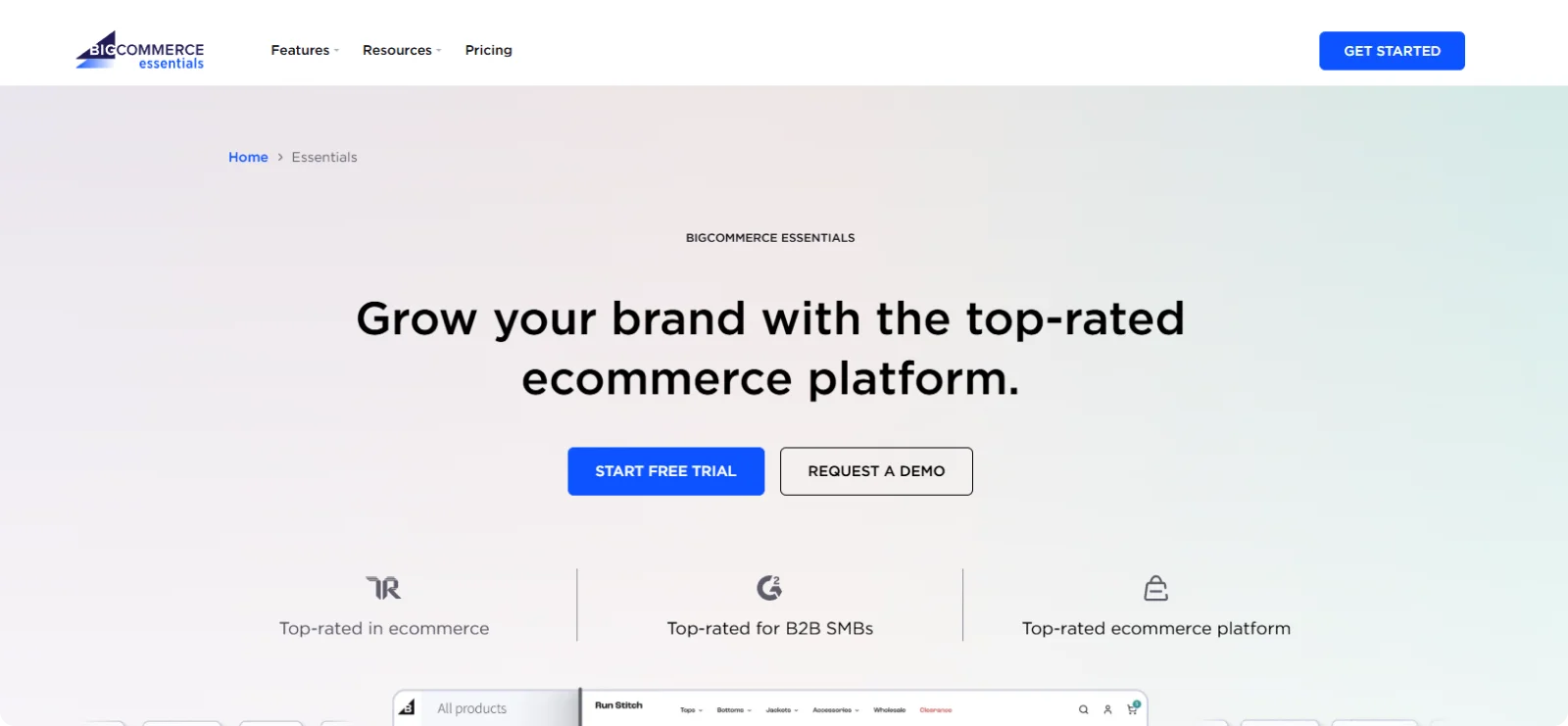
BigCommerce targets growing businesses needing built-in e-commerce features without purchasing multiple app subscriptions. The platform includes product filtering, customer segmentation, and multi-currency support as standard functionality.
Key Features
- Headless commerce API capabilities: Separate front-end presentation from backend commerce engine.
- No platform transaction fees: Integrate third-party payment gateways without markup fees beyond standard card processing rates.
- Built-in customer group segmentation: Create distinct customer categories with customized pricing and product visibility.
- Multi-storefront management from a single dashboard: Operate separate stores for different brands or regions while controlling them from a unified admin.
- Advanced product filtering for large catalogs: Let customers refine searches by brand, price, size, color, and custom attributes.
Pros
- Includes abandoned cart recovery, customer groups, and persistent carts at entry subscription levels
- Supports unlimited products, staff accounts, and file storage across all tiers
- Provides full platform access during the trial period, requiring no credit card for signup
Cons
- Offers limited free theme selection compared to competitor template libraries
- Requires higher-tier subscriptions to access custom SSL certificates and advanced analytics
Pricing
BigCommerce doesn't offer a free plan, but it provides a 15-day free trial. Paid plans start at $39 per month, or $29 per month when billed annually.
4. Wix eCommerce

Wix eCommerce appeals to merchants who prioritize visual design control over technical complexity. The drag-and-drop editor lets business owners place elements anywhere on pages without writing code.
Key Features
- Pixel-perfect drag-and-drop page builder: Position text, images, product galleries, and checkout buttons anywhere on the canvas without grid restrictions.
- Automatic mobile site generation: Create responsive mobile versions of desktop designs automatically.
- Wix Bookings for appointment-based businesses: Integrate service scheduling, staff calendars, and payment collection alongside physical products.
- Multi-channel inventory synchronization: Connect Facebook Shop, Instagram Shopping, and Amazon with automated inventory updates.
- Customizable product page templates: Design unique layouts for different product categories, with variant selectors and image galleries.
Pros
- Enables complete creative control over store appearance through unrestricted element positioning
- Combines website building with e-commerce features, allowing content-rich sites with integrated shopping
- Includes a free plan with limited features for basic online stores
Cons
- Prevents template switching after publishing sites
- Charges transaction fees on lower-tier plans
Pricing
Wix offers a free plan with limited e-commerce functionality and Wix branding. The basic e-commerce feature is included in the Core plan, which costs $29 per month.
5. Squarespace

Squarespace attracts merchants valuing design aesthetics and brand presentation. Businesses selling visually-driven products use the platform's professionally designed templates to create polished storefronts without hiring web designers.
Key Features
- Professionally designed templates: Access mobile-responsive templates emphasizing high-quality imagery and minimalist layouts.
- Fluid Engine drag-and-drop editor: Position content blocks, product galleries, and text on a grid-based canvas with precise spacing control.
- Abandoned cart recovery emails: Send customized email sequences to customers who leave checkout incomplete.
- Real-time carrier shipping calculations: Display accurate UPS, FedEx, and USPS rates at checkout based on customer location.
- Built-in analytics dashboard: Track sales performance, traffic sources, and customer behavior through integrated reporting.
Pros
- Delivers professionally designed storefronts through a high-quality template library
- Eliminates the need for separate tools through integrated blogging, email marketing, and appointment scheduling
- Includes a free custom domain for the first year with annual subscription plans
Cons
- Prevents switching templates after site launch
- Charges transaction fees on lower-tier plans
Pricing
Squarespace doesn't have a free plan but offers a 14-day free trial. Paid plans start at $25 per month, or $16 per month when billed annually.
6. Shift4Shop

Shift4Shop serves US-based merchants seeking enterprise-level e-commerce features. Businesses that process payments through the Shift4Shop gateway have access to the platform's full feature set.
Key Features
- Built-in customer relationship management system: Track customer interaction history, manage support tickets, and maintain detailed purchase records.
- Advanced B2B and wholesale capabilities: Operate simultaneous B2B and B2C sales channels, with separate pricing tiers and customer-specific catalogs.
- Real-time shipping label printing: Generate prepaid shipping labels directly through the admin dashboard for USPS, UPS, FedEx, and freight carriers.
- Integrated affiliate and loyalty programs: Reward repeat customers with points systems, and create affiliate marketing networks.
- Multi-storefront management: Control multiple brand-specific stores from a single admin panel with shared inventory.
Pros
- Eliminates monthly platform fees for qualifying US merchants
- Includes enterprise features, like third-party shipping calculations, at entry levels
- Provides unlimited products, file storage, and bandwidth across all tiers
Cons
- Limits availability to US-based businesses meeting minimum processing thresholds
- Presents a steeper learning curve through an extensive feature set requiring configuration
Pricing
Shift4Shop is free for US merchants processing at least $500 monthly through Shift4 Payments. Merchants using alternative payment gateways pay $41 per month for the starting plan.
7. Ecwid
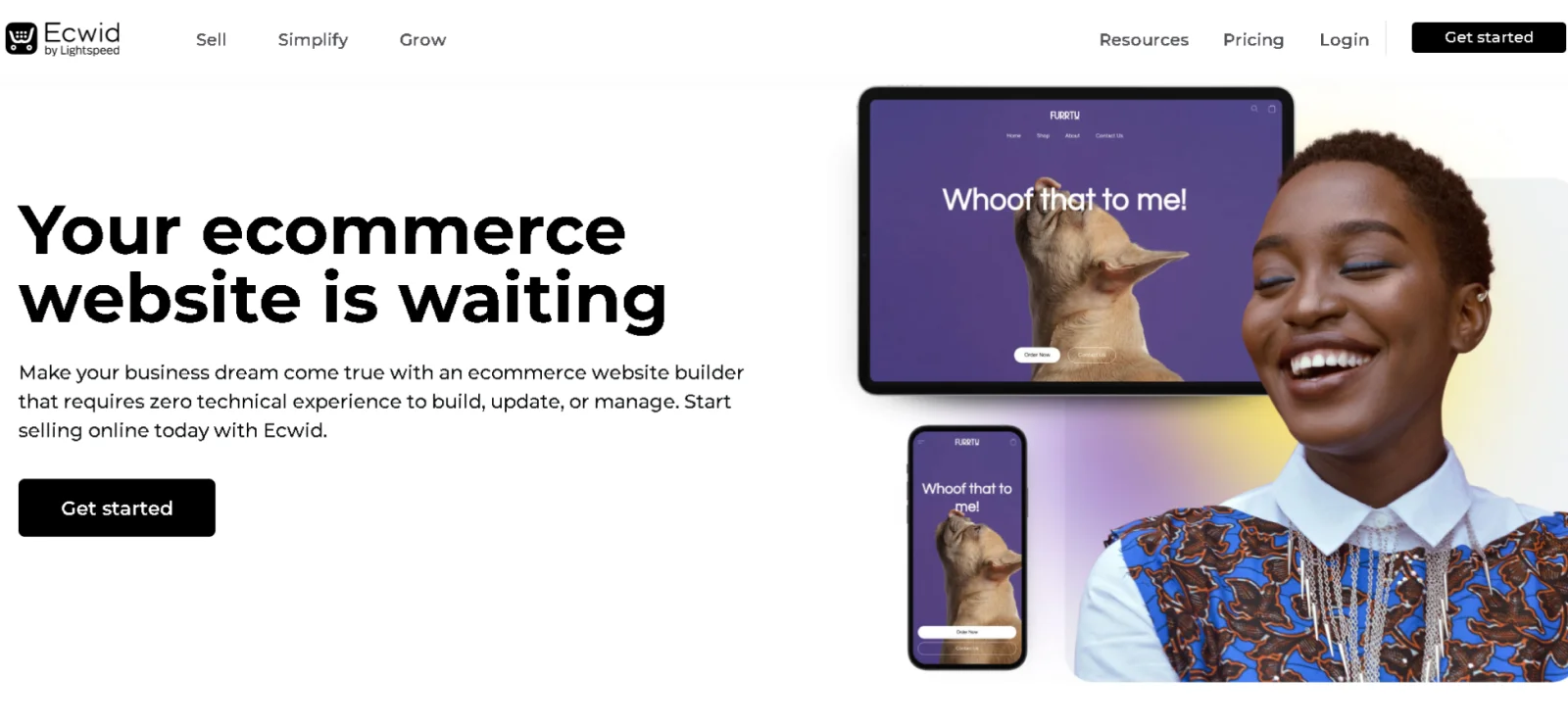
Ecwid targets merchants who want to add e-commerce functionality to existing websites without migrating platforms. Business owners with established WordPress blogs, Wix portfolios, or custom HTML sites can embed Ecwid's shopping cart code.
Key Features
- Website plugin integration for existing sites: Add a complete shopping cart and checkout to current WordPress, Wix, Squarespace, or custom HTML websites.
- Unified inventory across multiple sales channels: Synchronize product listings and stock levels across Facebook Shop, Instagram Shopping, Amazon, and eBay.
- Mobile point-of-sale application: Process in-person transactions via a smartphone app that syncs with online inventory.
- Product variation management: Create combinations of size, color, and material options with separate pricing per variant.
- Multi-currency and multi-language storefronts: Display prices in customers' local currency, and translate the store interface into multiple languages.
Pros
- Maintains existing website design while adding comprehensive e-commerce functionality
- Does not charge a transaction fee regardless of the payment processor
- Synchronizes inventory automatically across website, social media, and marketplace channels
Cons
- Limits the product variations feature to higher subscription tiers
- Provides phone support only on premium plans, restricting lower tiers to email and chat
- Requires plan upgrades for automated cart recovery emails
Pricing
Ecwid does not offer a free plan. Its starter plan costs $5 per month with up to 10 products.
8. Square Online
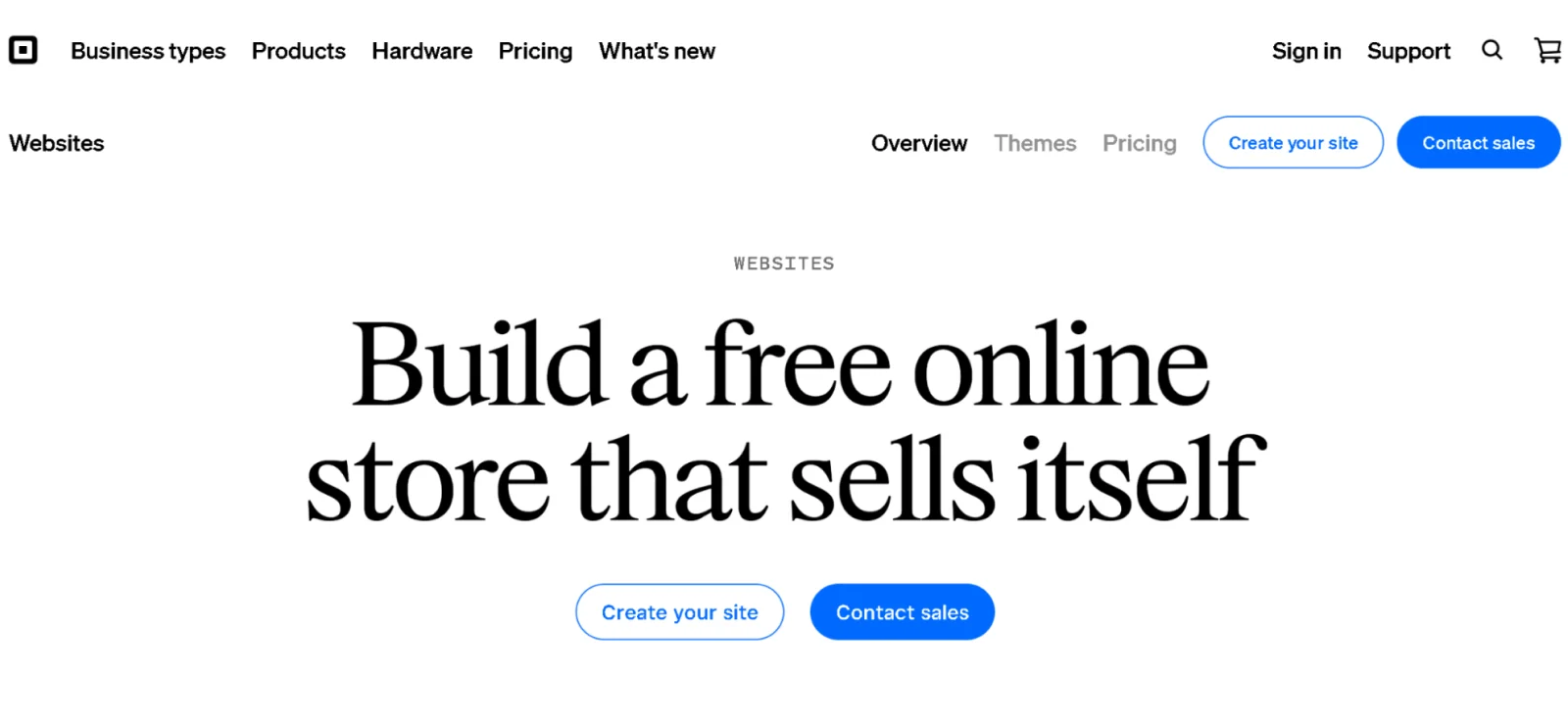
Square Online (Websites) serves merchants operating both physical retail locations and online stores simultaneously. Businesses already using Square's card readers extend their sales channels online while synchronizing inventory and transactions.
Key Features
- Automatic POS and online inventory synchronization: Get product stock levels and customer purchase history updates in real-time across physical stores and the website.
- Integrated payment processing through Square infrastructure: Accept credit cards, Apple Pay, Google Pay, and digital wallets through Square's payment system.
- Unlimited products on the free plan: List the entire product catalog, with no SKU restrictions or monthly fees, on the entry-level tier.
- Built-in appointment booking and invoicing: Schedule client appointments and send professional invoices with flexible payment terms.
- Automated abandoned cart recovery emails: Send timed email reminders to customers who leave checkout incomplete.
Pros
- Synchronizes all sales channels automatically
- Offers a functional free plan with unlimited products and core e-commerce features
- Provides the first Square card reader hardware free with account signup
Cons
- Charges higher transaction fees on a free plan compared to paid subscription tiers
- Limits design customization options with a smaller template selection
Pricing
Square Online offers a free plan with transaction fees per sale. Paid plans start at $49 per location per month with reduced transaction fees.
Why Codesi Is the Best WooCommerce Alternative
Codesi stands out among WooCommerce alternatives by removing the entire technical setup process. Instead of spending days configuring WordPress, researching plugins, and troubleshooting hosting, you can describe your products in simple terms and receive a complete online store ready to launch.
This approach suits entrepreneurs and small business owners who want professional storefronts without having to manage WordPress configuration or plugin compatibility. The platform handles hosting and security automatically, generates professional logos and AI images that match your brand, and delivers mobile-responsive designs without coding.
For users who value speed over technical complexity, Codesi offers a direct path from idea to launched store. Updates happen through visual editing, infrastructure scales automatically, and you can avoid the ongoing maintenance that comes with self-hosted platforms.
Ready to launch your online store without the WordPress complexity?
Try Codesi for free and generate your complete e-commerce site in minutes with no plugins, no hosting setup, and no technical maintenance required.
Create your website with AI today
Codesi is a platform where you can make a website in 3 minutes.
No coding, no designers, no hassle - just AI.