Back to blog
10 Best Website Builders Compared in 2026 [Pros & Cons]
Discover the best website builder comparison to help you choose a platform that fits your goals, budget & skills so you can launch with confidence.

Feb 4 2026
![10 Best Website Builders Compared in 2026 [Pros & Cons]](https://codesi.ai/admin/static/cov07_f3c87caa4a.webp)
Building a website used to take weeks and required either hiring developers or learning code. Website builders changed that by offering a faster and easier way to create a website. With 71% of small businesses now maintaining websites, the challenge has shifted from whether to build to what platform to use.
This guide compares the 10 best website builders in 2026, their advantages, potential downsides, and best uses.
10 Best Website Builders Compared
Before reviewing each option, here's an overview of how they compare side-by-side:

1. Codesi

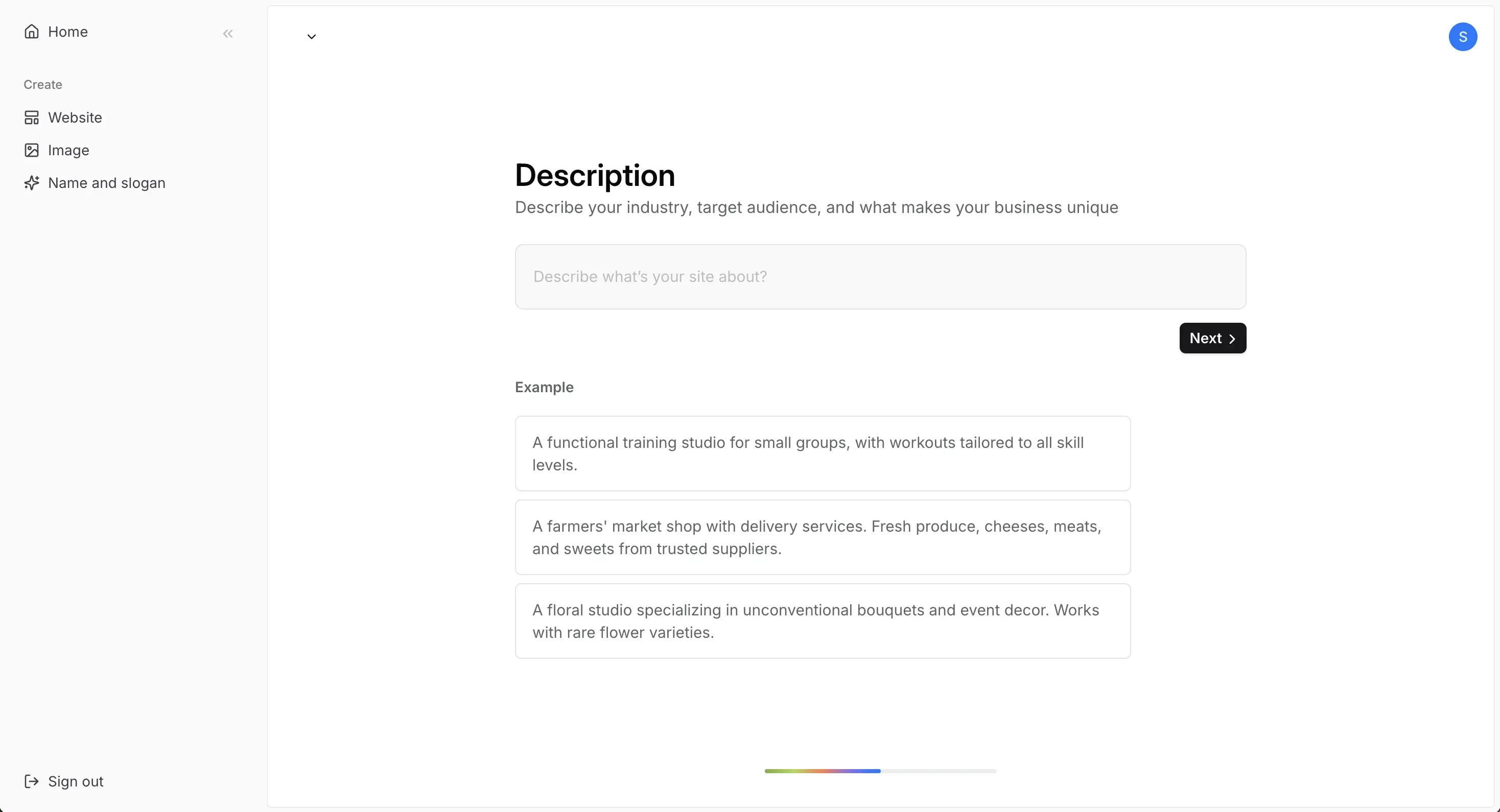
Codesi is an AI website builder that targets small business owners and freelancers who need professional sites without coding or learning design tools. The builder helps users launch products, promote services, and establish an online presence in no time.
Key Features
- Text-to-website generation: Creates complete sites with layout, content, and visuals in under five minutes
- Logo creation tool: Produces multiple logo variations with different color schemes and styles automatically
- AI image generator: Builds branded visuals specific to your content without stock photo libraries
- Domain and hosting included: Connects custom domains or publishes to a free subdomain with SSL encryption
- Interactive editor: Adjusts text, images, and sections with real-time preview and AI-powered editing assistance
Pros
- Produces original designs for each project
- Bundles website creation with logo design, image generation, and business planning tools
- Requires minimal decision-making
Cons
- Limits use cases that require multiple pages or structured navigation
- Provides limited third-party app connectivity
Pricing
Codesi offers a free plan with one website generation per day and the ability to publish one site on a Codesi subdomain. Paid plans start at $16 per month, or $12 per month when paid annually.
2. Wix

Wix works for small business owners and first-time creators wanting design freedom paired with business tools. Beginners rely on the Aria AI assistant for guidance, while experienced users turn to Wix Studio for agency work.
Key Features
- Wix Harmony builder: Combines natural language prompts with drag-and-drop editing for both AI generation and manual refinement
- Template library: Provides 900+ professionally designed templates across industries, with mobile optimization built in
- App marketplace: Extends functionality through 300+ third-party integrations for bookings, events, marketing automation, and business management
- E-commerce capabilities: Supports online stores with inventory management, multiple payment processors, and abandoned cart recovery
- Business tools suite: Includes blogging platform, SEO assistant, email campaigns, analytics, and customer relationship management
Pros
- Allows pixel-perfect positioning of elements without rigid block constraints
- Supports both beginner-friendly Classic Editor and professional-grade Wix Studio
- Includes hosting and SSL security
Cons
- Prevents template switching after site publication
- Requires external apps and integrations for advanced email marketing and specialized functionality
Pricing
Wix offers a free plan with Wix branding and a subdomain. Paid plans start at $17 monthly for the Light plan, which includes a custom domain and ad removal.
3. Webflow

Webflow suits professional designers, agencies, and developers needing pixel-perfect control without hand-coding. It is most suitable for teams that are building custom marketing sites, SaaS pages, or content-heavy projects where clean code output matters.
Key Features
- Visual designer: Generates production-ready HTML, CSS, and JavaScript through an interface that mirrors design tools like Figma, with built-in Flexbox and CSS grid controls
- Content management system: Handles dynamic content through Collections, with a schema-based structure for blogs, portfolios, and product pages
- Code export capability: Allows downloading clean, semantic HTML and CSS files for external hosting or developer handoff
- Interactions and animations: Lets you create scroll-triggered effects, hover states, and complex animations without JavaScript knowledge
- Team collaboration tools: Supports multiple user roles, shared component libraries, real-time editing, and staging environments for client review
Pros
- Produces clean, exportable code that developers can modify or integrate into existing projects
- Eliminates plugin dependencies and maintenance overhead through an all-in-one platform combining hosting, CMS, and security
- Handles content-driven websites with thousands of CMS items and high traffic volumes
Cons
- Requires understanding CSS concepts, creating a steeper learning curve than template-based builders
- Separates individual site features from team collaboration tools
Pricing
Webflow offers a free Starter plan with a Webflow.io subdomain and limited features. Paid Site Plans start at $14 monthly for Basic when billed annually.
4. WordPress.com

WordPress.com attracts bloggers, content creators, and small businesses wanting WordPress without server management. The hosted service appeals to those seeking plugin access and theme flexibility, minus technical hosting.
Key Features
- Plugin installation: Provides access to over 50,000 WordPress plugins on paid plans, enabling features such as contact forms, social media integration, and e-commerce functionality
- Theme library: Offers thousands of free and premium themes with customization for colors, fonts, and layouts
- Built-in monetization: Supports WordAds advertising program, premium content subscriptions, affiliate links, and product sales
- Automatic updates: Handles WordPress core updates, security patches, and plugin compatibility automatically
- Jetpack integration: Includes security features, performance optimization, site statistics, and automated backups through bundled Jetpack tools
Pros
- Eliminates server management, security monitoring, and technical maintenance responsibilities
- Supports blogs and publication-focused websites with unlimited bandwidth on paid plans
- Provides extensive documentation and large community support
Cons
- Restricts plugin installation to Business plan and above, limiting functionality on lower-tier subscriptions
- Restricts control over the server environment and advanced customization options
Pricing
WordPress.com offers a free plan with a WordPress.com subdomain and limited features. Paid plans start at $9 per month, or $4 per month when billed annually.
5. Shopify

Shopify is built specifically for running online stores and managing product sales across multiple channels. It is designed for businesses that need inventory control, integrated payments, and order management rather than general website publishing.
Key Features
- Multi-channel selling: Synchronizes inventory and orders across online store, Instagram, TikTok, Facebook, Amazon, and in-person sales through Shopify POS
- Product management: Supports unlimited products with extensive variant options per item, automatic inventory tracking, and real-time stock updates
- Shopify Payments: Processes credit cards, Apple Pay, PayPal, and Shop Pay without third-party gateway fees, reducing transaction costs
- Marketing automation: Includes email campaigns, abandoned cart recovery, discount codes, and customer segmentation for targeted promotions
- App ecosystem: Extends functionality through thousands of apps for shipping, reviews, subscriptions, and specialized business needs
Pros
- Eliminates the need for a separate inventory system, payment processor, and hosting provider
- Optimizes payment processing efficiency for growing businesses with higher transaction volumes
- Scales effectively from single-product stores to high-volume operations, with an enterprise option available
Cons
- Charges transaction fees when using third-party payment gateways
- Limits flexibility when exporting products, orders, and customer data
Pricing
Shopify offers a 3-day free trial, followed by a $1/month fee for three months (for new users). Standard plans start at $27 per month.
6. Weebly

Weebly is a beginner-friendly website builder designed for simple websites and small online stores. It is commonly used by individuals and small businesses that want basic site and e-commerce functionality without complex setup or advanced customization.
Key Features
- Drag-and-drop editor: Arranges website elements through a block-based interface without requiring technical knowledge or coding skills
- Square integration: Processes payments through Square, PayPal, and Stripe with synchronized inventory management across online and in-person sales
- Free e-commerce access: Enables unlimited product listings and basic selling capabilities across all plans
- Template library: Offers customizable mobile-responsive themes designed for quick deployment and modification
- App Center: Extends functionality through third-party integrations for marketing, shipping, reviews, and specialized business needs
Pros
- Launches functional websites in minimal time with straightforward setup and intuitive controls
- Offers complete testing access to platform capabilities
- Includes phone support across all pricing tiers
Cons
- Displays visible advertisements on the Free and Personal plans, reducing professional appearance
- Receives limited updates
Pricing
The Free plan is available with Weebly branding. Paid plans start at $13 per month, or $10 per month when billed annually.
7. GoDaddy Website Builder

GoDaddy Website Builder works for small business owners and beginners, taking the fastest path from domain to published site. It best fits users who are already on GoDaddy and prioritize convenience over design depth.
Key Features
- AI website builder (GoDaddy Airo): Generates complete websites within minutes through a guided questionnaire about business type, industry, and preferences
- Block-based editor: Adds pre-designed sections via a simple point-and-click interface without code or complex design decisions
- Integrated marketing tools: Bundles email campaigns, social media content creation, SEO wizard, and performance analytics in a single dashboard
- Appointment scheduling: Enables direct booking and payment collection for service-based businesses on the Premium plan and above
- Domain and hosting integration: Combines website building, domain management, and hosting under a unified GoDaddy account
Pros
- Launches functional websites quickly through streamlined setup, minimizing decision points and technical configuration
- Provides always-available customer support across all plans
- Consolidates multiple business tools under a single provider, reducing account management complexity
Cons
- Offers limited design customization features
- Constrains content structure for sites that grow beyond basic pages
Pricing
The Free plan is available with GoDaddy branding and a subdomain. Paid plans start at $10.99 monthly for Basic when billed annually, renewing at $16.99 monthly.
8. Duda

Duda targets web professionals, digital agencies, and freelancers managing multiple client sites. Teams building at scale who need collaboration tools, white-label options, and structured workflows without extensive coding can benefit the most from this platform.
Key Features
- AI-powered website generation: Creates complete multi-page websites through a business questionnaire, with automated content, SEO metadata, and page structure suggestions
- Client management system: Provides white-label capabilities, permission settings, client billing integration, and simplified end-customer editor access
- Advanced design controls: Combines drag-and-drop editing with CSS grid, Flexbox positioning, code access for HTML/CSS/JavaScript customization, and reusable sections
- Performance optimization: Delivers industry-leading Core Web Vitals scores through AWS hosting, automated speed optimization, and built-in security features
- Team collaboration tools: Enables multiple team members, site comments, dynamic pages, a custom widget builder, and API access for workflow automation
Pros
- Reduces website development time through template libraries, reusable components, and streamlined professional workflows
- Ranks consistently high for SEO performance, with automatic technical optimizations
- Supports agencies managing numerous client sites, with a centralized dashboard and standardized processes
Cons
- Has a steep learning curve, requiring an understanding of container-based structure
- Increases cost and setup complexity for single-site owners
Pricing
Duda does not offer a free plan, but a 14-day free trial is available. Paid plans start at $25 per month, or $19 per month when billed annually.
9. SITE123

SITE123 serves beginners who want published sites with minimal decision-making. It's best for first-time builders who value extreme simplicity over design flexibility.
Key Features
- Section-based editor: Assembles websites through pre-designed blocks with fixed layouts, eliminating freeform positioning and design complexity
- Multilingual capabilities: Supports unlimited languages on paid plans, with automatic translation features for reaching international audiences
- Ready-made structures: Generates a complete website framework automatically based on site type selection
- Always-available support: Provides live chat assistance around the clock across all tiers
- App marketplace: Extends functionality through integrations for analytics, payment processing, booking systems, and marketing tools
Pros
- Removes complex design decisions through pre-structured sections and automated layout generation
- Simplifies multilingual site setup through centralized language management
- Delivers responsive customer support and helpful guidance, regardless of subscription level
Cons
- Restricts design customization, limiting unique visual expression and layout control
- Prevents template switching after publishing or importing an external design
Pricing
SITE123 has a free plan available with a SITE123 subdomain and branding. Paid plans start at $12.80 per month for Premium (billed annually).
10. Squarespace

Squarespace attracts creative professionals, photographers, and design-focused businesses where visual presentation drives client decisions. The platform specializes in gallery-quality layouts with professionally curated aesthetics.
Key Features
- Blueprint AI builder: Generates custom websites through a guided questionnaire about business type, goals, and brand image, with real-time design preview
- Designer templates: Provides over 150 mobile-optimized templates, with Fluid Engine editor for drag-and-drop customization
- Scheduling and membership tools: Manages appointments through Acuity integration and creates gated content with member-only sections
- Integrated e-commerce: Handles product management, inventory tracking, and abandoned cart recovery on higher-tier plans
- Marketing automation: Includes email campaigns, SEO assistant, analytics dashboard, and social media integrations
Pros
- Delivers consistently high aesthetic quality without requiring design expertise or technical skills
- Bundles hosting, SSL security, and domain registration within annual subscriptions
- Provides reliable uptime and automated performance optimization across all plans
Cons
- Limits advanced customization options
- Requires separate domain renewal after the initial period
Pricing
Squarespace offers a 14-day free trial without requiring a credit card. Paid plans start at $25 per month, or $16 per month when billed annually.
How to Choose the Right Website Builder in 2026
Start by identifying what you're building, and choose a platform designed for that purpose. For example, e-commerce sites need inventory management and payment tools, while blogs require content organization and SEO features.
Platforms built specifically for your core function will serve you better than general-purpose builders trying to do everything.
Also, match the builder to your current skill level. Beginner platforms offer guided setup and automated choices that get you online quickly, while advanced builders provide detailed control but require technical understanding.
You should also consider how much design freedom you actually need, since more control means more decisions and longer timelines.
As for pricing, look beyond advertised monthly rates when comparing options. Factor in domain renewals, email hosting costs, and app subscriptions that add up over time. Watch for promotional prices that increase after the first year.
Build Your Website with Codesi
Most website builders make you choose between speed and quality. Codesi delivers both by generating complete, original websites in under five minutes through simple text prompts.
You get a fully designed site with relevant content, a custom logo, and brand-appropriate images without navigating complex editors. The interactive editor lets you refine everything through conversational requests until it matches your vision.
Looking for a website builder that saves time? Codesi handles the heavy lifting while giving you control over the final result, so you can focus on running your business instead of learning how to code.
Start building with Codesi and have a professional website live before the end of the day.
Create your website with AI today
Codesi is a platform where you can make a website in 3 minutes.
No coding, no designers, no hassle - just AI.