Back to blog
Top 8 Best-Performing Personal Website Builders of 2026
Explore the best-performing personal website builders so you can choose the right platform to create a fast, professional site that fits your goals.

Jan 26 2026

Your personal website is often the first place people go to understand who you are and what you do. To stand out quickly and affordably, a website builder is your best option—but not all builders deliver the same results. If you choose one that doesn't match your needs or technical comfort level, you risk creating an experience that frustrates visitors rather than impressing them.
Some website builders focus on features and templates, while quietly adding unnecessary complexity behind the scenes. To help you decide, this guide highlights the top eight best-performing personal website builders that prioritize performance without sacrificing usability.
Why Do You Need a High-Performing Personal Website?
People use personal websites to establish credibility, showcase their skills, and control how they present themselves online.
Because these sites are often the first point of contact, performance plays a major role in whether visitors stay or leave. Mobile visitors, in particular, tend to leave if a page takes longer than three seconds to load.
A high-performing personal website matters because it helps you:
- Make a strong first impression without distractions or delays
- Keep visitors engaged long enough to explore your work or story
- Improve visibility in search results through a cleaner structure and faster pages
- Deliver a consistent experience across mobile and desktop devices
- Reflect professionalism through responsiveness and reliability
At a minimum, a personal website should feel immediate and dependable. If it does not load quickly or respond smoothly, the content rarely gets a chance to matter.
The 8 Best-Performing Personal Website Builders in 2026
Before reviewing each builder individually, we'll show you how they compare side-by-side:

1. Codesi

Codesi is an AI website builder that is suitable for freelancers, consultants, and small business owners. The builder generates professional, high-performing websites in minutes without requiring coding, design skills, or developer support.
Key Features
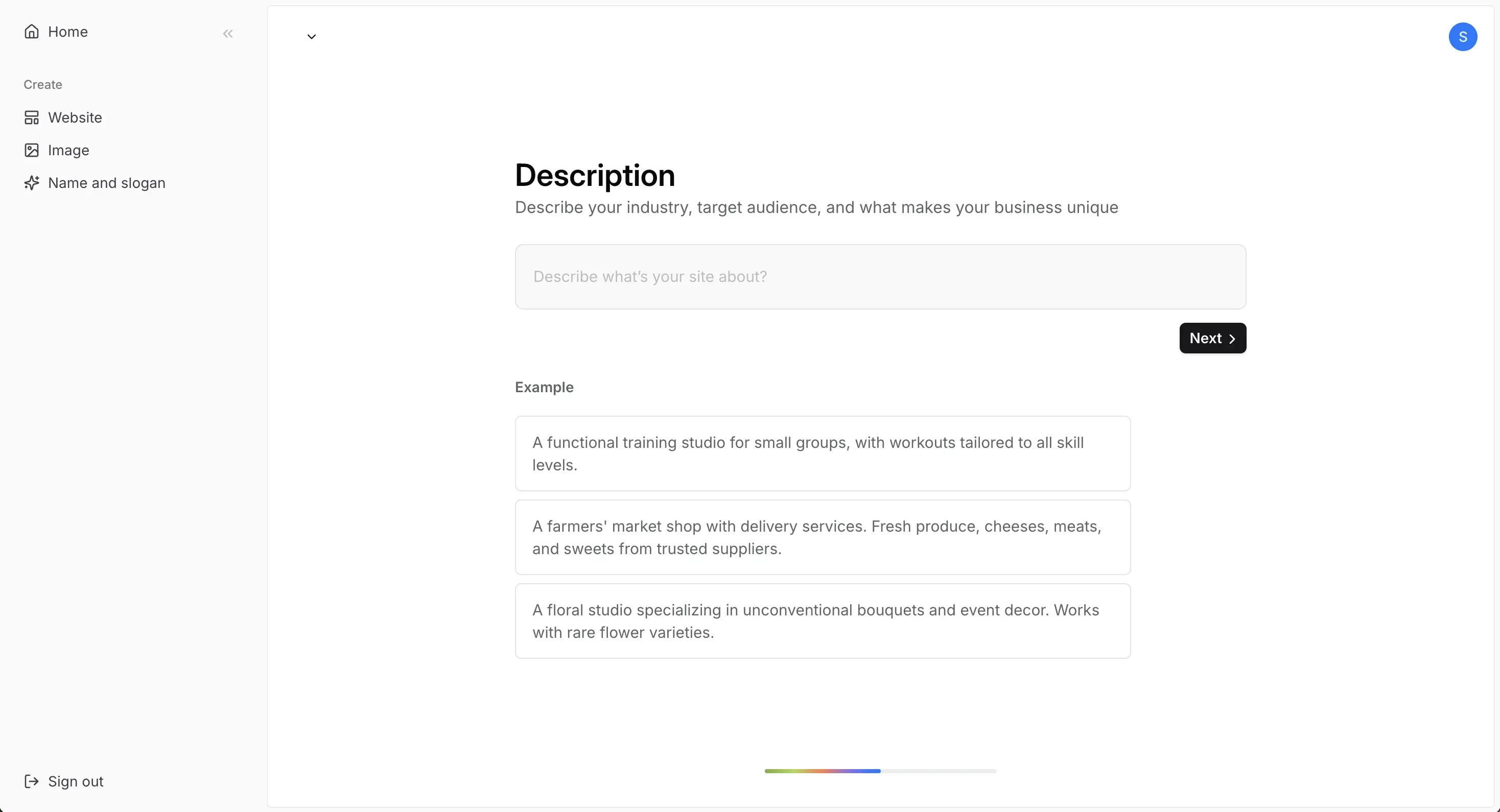
- AI-powered site generation: Describe your business and watch the AI build a complete one-page website with optimized structure and content.
- Real-time visual editing: Adjust colors, fonts, layouts, and content with instant preview updates.
- Automatic performance optimization: Generate clean code with built-in image compression, lazy loading, and mobile responsiveness.
- Pre-built interactive components: Add scroll animations, hover effects, and smooth transitions without configuration.
- One-click publishing: Launch your site instantly with CDN hosting and support for custom domains included.
Pros
- Eliminates weeks of development time by generating optimized sites in minutes
- Delivers both speed and simplicity
- Saves thousands in developer costs while delivering professional results
Cons
- Offers less control over individual design elements
- Works best for one-page personal sites rather than complex multi-section portfolios
Pricing
Codesi offers a free plan that allows you to create and host websites. Paid plans start at $16 per month or $12 per month on an annual subscription.
2. Webflow

Designers use Webflow to build custom personal websites with complete creative control over every visual detail. The platform suits users who are comfortable with design tools and want pixel-perfect layouts without writing code from scratch.
Key Features
- Visual CSS grid and flexbox: Control exact positioning and spacing using professional layout systems.
- CMS for portfolio management: Organize projects, case studies, and blog posts with dynamic collections that update across pages.
- Custom animations and interactions: Create scroll-triggered effects, hover states, and page transitions with timeline-based controls.
- Template marketplace: Start with professionally designed templates built by the Webflow community.
- Code export option: Download your site's HTML, CSS, and JavaScript for self-hosting or further development.
Pros
- Offers the same design control as writing code manually, without requiring developer skills or syntax knowledge
- Produces standards-compliant code that performs well with thoughtful design choices
- Scales from simple portfolios to complex sites through built-in CMS and e-commerce
Cons
- Requires significant time to master the interface and core web design concepts
- Risks slow performance when adding animations without optimization knowledge
Pricing
Webflow offers a free plan for basic site creation and testing, and paid plans start at $18 per month.
3. Carrd

Freelancers and creators use Carrd to build personal sites that load instantly with zero bloat. This web builder targets users who need simple landing pages, bio links, or portfolio homepages without the complexity of multi-page sites.
Key Features
- Single-page focus: Build one-page sites optimized for speed, with sections that scroll vertically.
- Form integration: Collect emails, contact requests, or survey responses with built-in form handling.
- Multiple-site management: Build and publish up to three sites on the free plan.
- Responsive templates: Choose from dozens of pre-designed layouts that adapt automatically to all screen sizes.
- Embed widgets: Add social feeds, payment buttons, calendars, or third-party tools through simple embed codes.
Pros
- Allows detailed customization of colors, fonts, backgrounds, and animations
- Supports custom domains and SEO basics to improve site visibility
- Delivers quick site creation through a simple drag-and-drop builder
Cons
- Not suitable for complex personal brands that need multiple pages, galleries, or case studies
- Lacks built-in tools for managing large portfolios or detailed content hierarchies
Pricing
Carrd offers a free plan with limited features. Paid plans start at $9 (billed yearly) for custom domains and additional features.
4. Notion

Notion works well for writers and creators who already manage their content within the platform. Pages can be published as live websites, so updates happen in one place without maintaining a separate site.
Key Features
- Direct Notion publishing: Share any Notion page as a live website with a toggle switch.
- Collaborative editing: Update content in your familiar Notion workspace and see changes reflected instantly on your site.
- Database views: Display projects, writing samples, or case studies using Notion's table, gallery, or timeline layouts.
- Search functionality: Let visitors search your entire site using Notion's built-in search.
- Comment integration: Enable visitor comments and discussions on published pages.
Pros
- Simplifies content organization with Notion's database views like tables, galleries, and timelines
- Updates instantly when you edit Notion pages
- Doesn't cost anything if you already have a Notion subscription
Cons
- Offers no access control for pages, databases, or properties, limiting client portal functionality
- Depends entirely on Notion's infrastructure
Pricing
Notion offers a free plan for individuals, and paid tiers start at $12/month per user.
5. Wix

Wix suits beginners and non-technical users who want to build personal websites through drag-and-drop editing with extensive template options. The platform is great for people who prioritize ease of use and visual customization over peak performance or technical control.
Key Features
- Wix ADI (Artificial Design Intelligence): Answer questions about your site, and let Wix's AI generate a starter design automatically.
- App market: Add booking systems, social feeds, galleries, forms, and other third-party integrations.
- Wix editor X: Access advanced design tools, like breakpoint customization and CSS grid, for more precise control.
- Video backgrounds: Embed full-screen video backgrounds on hero sections and landing pages.
- SEO wiz tool: Follow guided prompts to optimize meta tags, descriptions, and site structure for search engines.
Pros
- Offers a large template library with hundreds of designs across industries and styles
- Has no learning curve, allowing complete beginners to publish sites within hours
- Includes built-in tools for blogs, portfolios, stores, and bookings without separate plugins
Cons
- Limits SEO performance due to weaker advanced optimization features
- Locks you into Wix hosting with no export or migration options
Pricing
Wix offers a free plan. The paid tiered plans start at $17/month for ad-free sites with custom domains.
6. Squarespace

Squarespace is built for creatives, photographers, and design-led individuals who want a polished look without hiring developers. It prioritizes typography, spacing, and image presentation rather than packing in lots of features.
Key Features
- Designer templates: Start with professionally crafted layouts built specifically for portfolios, galleries, and creative showcases.
- Built-in analytics: Track visitor behavior, traffic sources, and page performance without connecting external tools.
- Blogging support: Publish articles with categories, tags, scheduled posts, and RSS feeds built into every plan.
- Commerce integration: Sell digital products, services, or physical goods with built-in checkout and payment processing.
- 24/7 customer support: Access live chat and email support any time you need help or troubleshooting.
Pros
- Delivers visually refined templates without requiring design skills
- Handles domain registration, hosting, and email marketing within one platform
- Maintains consistent quality across templates for professional-looking sites
Cons
- Lacks autosave, causing users lose edits if they forget to save manually
- Keeps design choices within structured templates, reducing flexibility for custom layouts
Pricing
Squarespace offers a 14-day trial to build and test a site. Paid plans start at $25 per month on the Basic tier.
7. Webnode

Webnode helps small business owners and individuals create multilingual personal websites using straightforward editing tools. The platform suits users who need professional sites in multiple languages without a complex setup.
Key Features
- Multilingual support: Create your site in up to 20 languages with separate content for each version and automatic language switching.
- Pre-designed templates: Choose from industry-specific templates that adapt to portfolios, resumes, and personal branding.
- Integrated contact forms: Collect inquiries, applications, or feedback, with form submissions delivered directly to your email inbox.
- Mobile editor: Preview and adjust your site's mobile layout separately to ensure it displays properly on phones.
- Built-In SEO settings: Configure page titles, descriptions, and URLs for each language version independently.
Pros
- Simplifies reaching international audiences by managing multiple language versions from one dashboard
- Requires minimal setup time with intuitive editing and no technical skills needed
- Includes hosting, SSL certificates, and basic features in free plans
Cons
- Lacks advanced features, like animations or custom code
- Restricts design flexibility with limited color and font choices
Pricing
Webnode offers a free plan. Paid plans start at $4.50/month for ad-free sites with custom domains.
8. Mmm.page

Social media creators and tech-savvy professionals use Mmm.page to build vertical-scrolling mobile-first personal pages. It's designed for users who want quick, visually engaging bio sites optimized specifically for smartphone viewing.
Key Features
- Vertical scroll design: Build pages that flow naturally with mobile browsing patterns.
- Touch-optimized elements: Add swipeable image carousels, tappable buttons, and mobile-friendly navigation.
- Visual building blocks: Stack text, images, videos, links, and embeds without worrying about layout or alignment.
- Social media integration: Embed Instagram feeds, TikTok videos, Twitter timelines, and YouTube content directly.
- One-page focus: Create single-page experiences optimized for quick mobile consumption.
Pros
- Loads fast on mobile devices by prioritizing vertical content and minimal code
- Requires zero design decisions, with automatic mobile-optimized layouts
- Creates shareable bio pages for Instagram, TikTok, or Twitter profile links
Cons
- Performs poorly on desktop devices
- Limits professional use cases that need multiple pages, detailed portfolios, or traditional navigation
Pricing
Mmm.page has a free plan that lets you build and test a basic site. Paid plans start at $6/month and include premium fonts, custom domains, and extra design tools.
Which Website Builder Should You Choose?
The right website builder depends on how much control, speed, and simplicity you need. Some platforms favor deep customization but require time and technical knowledge, while others limit flexibility in exchange for faster setup and fewer decisions.
For a personal website, performance and reliability tend to matter more than advanced features. A builder that produces clean pages, works well on mobile, and stays easy to maintain over time is usually the best choice.
Build a High-Performing Personal Website with Codesi
Building a personal website that loads quickly often turns into a technical project. Performance tuning, asset optimization, and mobile fixes tend to slow things down long before the site is ready to share.
Codesi removes that friction. You describe what you want to build, and the platform generates a complete personal website with clean structure, optimized assets, and responsive layouts already in place.
Here's what you get with Codesi:
- Complete site creation: Pages are generated with written content, AI images, and professional logos that fit the layout from the start.
- Built-in performance optimization: Images, layouts, and assets are handled automatically, keeping the site fast as it grows.
- Direct on-page editing: You can update text, swap images, adjust colors, or reorganize sections and see changes immediately.
- Mobile-ready by default: Every page adapts cleanly across phones, tablets, and desktops without extra setup.
From simple personal pages to focused portfolios, Codesi delivers a site that feels intentional and dependable. The technical work runs quietly in the background, so you can focus on presenting your work clearly.
Ready to build a personal website that performs as well as it looks?
Start with Codesi and publish with confidence.
Create your website with AI today
Codesi is a platform where you can make a website in 3 minutes.
No coding, no designers, no hassle - just AI.