Back to blog
10 Best Interactive Website Examples & Features for 2026
Discover the best interactive website examples to engage visitors, boost conversions, and create memorable, responsive, and dynamic experiences.

Jan 8 2026

How long do visitors stay on your website? If your answer is "not long enough," you're not alone.
In 2026, static websites don't cut it anymore. Users expect interfaces that respond and make them want to engage. With over 64% of web traffic coming from mobile devices, interactive elements must work flawlessly on smaller screens through touch gestures and responsive design.
Interactive websites keep visitors on your page longer, guide them through your content naturally, and turn passive scrolling into active participation.
To inspire you, this guide shares the ten best interactive website examples and their features that are setting the standard in 2026.
Key Takeaways
- Interactive features keep visitors engaged longer
Scroll animations, hover effects, and real-time feedback encourage exploration, reduce bounce rates, and boost conversions.
- Design for mobile first
Most visitors browse on their phones, so interactive elements must work perfectly on small screens.
- Make interactivity purposeful, not decorative
The best sites use interactive features to solve problems and simplify navigation, not just to look impressive.
- AI website builders simplify the process
Tools like Codesi let anyone create professional interactive sites without coding or hiring developers.
What Makes a Website Interactive in 2026
Interactive design goes beyond clicks and links. It's about creating moments where the site responds to user behavior in ways that feel intuitive, helpful, and engaging.
In 2026, the best interactive websites share a few core characteristics:
- User-triggered animations and transitions: Elements that move, fade, or transform as you scroll or click. These aren't decorative; they guide attention and create a sense of flow.
- Personalized content based on behavior: Sites that adapt to what you're doing: Show interest in a product category, and the homepage shifts to highlight similar items. Skip a section, and the site remembers.
- Real-time feedback and micro-interactions: Small confirmations that your action registered. This can be a button that subtly changes color when hovered, a form field that validates as you type, or a progress bar that updates instantly.
- Scroll-based storytelling: Content that unfolds as you move down the page. Layers reveal themselves, images shift into view, text animates in sync with your scroll speed.
- Gamification elements: Features borrowed from games, like progress trackers, achievement badges, or interactive quizzes. These turn browsing into an experience with momentum.
10 Best Interactive Website Examples & Features to Inspire You
The best interactive websites in 2026 don't follow a single formula, but the most effective ones do share a few essentials: they're easy to use, communicate clearly, and leave a lasting impression through thoughtful interaction.
Below are 10 interactive website examples across different industries that offer practical inspiration grounded in today's trends.
1. Codesi

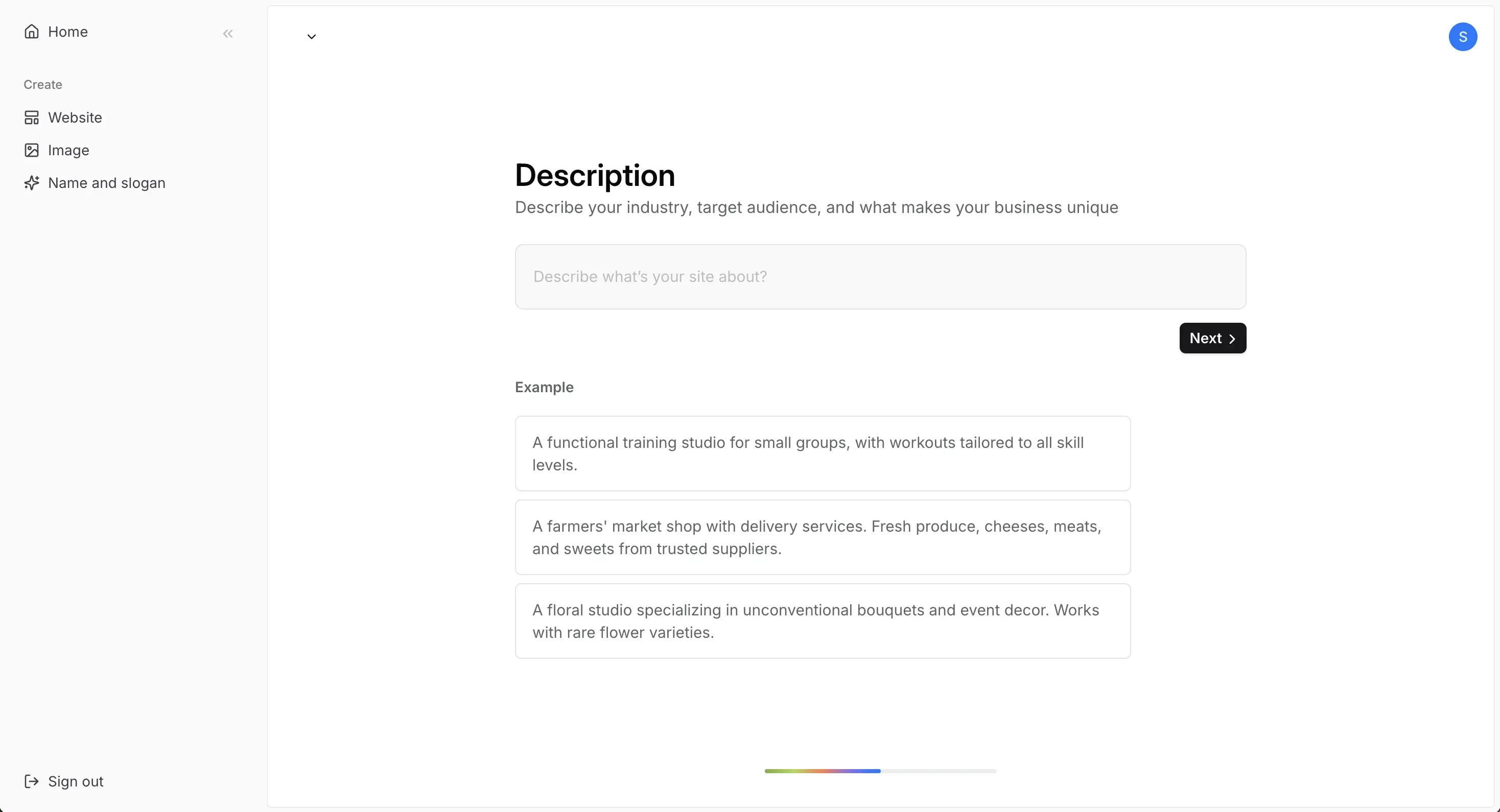
Codesi's website builder interface demonstrates interactive design at its most practical. Users can describe their business and watch as the AI generates a complete website in real time.
The customization panel lets visitors switch color palettes, adjust fonts, and rearrange sections with instant visual feedback. Every change updates the preview immediately, making the website creation feel collaborative rather than technical.
Why it works: The real-time preview eliminates guesswork and builds confidence. Users see exactly what they're getting, which speeds up the creation process and reduces hesitation. The interface balances powerful functionality with simplicity, making professional website building accessible to non-technical users.
Hint: Show users exactly what they're creating as they work, with instant visual feedback for every change, so they feel in control without needing technical knowledge.
2. Bruno Simon

Bruno Simon's portfolio redefines what a personal website can be. Instead of traditional navigation, visitors control a miniature car through a 3D environment where different areas represent portfolio sections. The physics-based interaction, complete with sound effects and animated elements, turns browsing into an immersive experience that demonstrates his technical skills.
Why it works: The 3D interaction showcases Bruno's expertise in interactive design and advanced front-end development. It keeps visitors engaged longer by turning navigation into exploration, making the portfolio itself a demonstration of capability rather than just a container for work samples.
Hint: Your portfolio should demonstrate your skills, not just describe them.
3. Stripe

Stripe's homepage uses scroll-triggered animations to demonstrate how its API works in real time. As you scroll, code snippets appear, update, and execute, showing developers exactly how simple integration can be. The experience is educational and interactive without requiring users to leave the page or open documentation.
Why it works: For a technical audience, seeing is believing. Stripe's interactive demos let developers visualize the implementation process in real time. The scroll-based reveal keeps users engaged while delivering complex information in digestible chunks.
Hint: Complex ideas need breathing room. Break technical content into digestible sections that appear progressively as users scroll, and use animations to reveal each step at just the right moment.
4. Airbnb

Airbnb's search experience combines filters, real-time results, and an interactive map that updates as you browse. Hover over a listing, and the corresponding location highlights on the map. Adjust your dates or budget, and results refresh instantly without reloading the page.
Why it works: The interaction feels natural and responsive. Users can explore neighborhoods visually while comparing options, making the search process more intuitive than traditional list-based browsing.
Hint: Location matters, so show it visually. Embed interactive maps that help visitors understand where things are, and pair them with filters that make finding relevant options effortless.
5. Spotify

Spotify's web player is packed with subtle micro-interactions that make the interface feel alive. Hover over an album, and it gently lifts with a shadow effect. Click play, and the button smoothly transitions to a pause icon with a ripple animation. Even small actions like adding songs to playlists come with visual feedback.
Why it works: These micro-interactions create a sense of responsiveness. Every action feels acknowledged, which makes the experience more satisfying. The animations are quick enough to feel instant but noticeable enough to provide confirmation.
Hint: Small details create big impressions. Add subtle hover effects and smooth transitions to buttons and images so every interaction feels polished, responsive, and intentional.
6. Duolingo

Duolingo transforms language learning into an interactive game. Every lesson includes progress bars, streak counters, achievement badges, and instant feedback on answers. Users unlock new levels, earn rewards, and compete on leaderboards, all while learning a new language.
Why it works: Gamification taps into motivation and habit formation. The constant feedback loop, visual progress indicators, and reward system keep users coming back. Each interaction feels purposeful and contributes to a larger goal.
Hint: Progress motivates action. Show visitors how far they've come with visible progress indicators, milestone celebrations, and clear next steps that keep them engaged.
7. Nike

Nike's customization tool lets users design their own sneakers in real time. Pick colors for different shoe sections, choose materials, add personalization, and watch your design update instantly in a 3D preview. The tool is intuitive and visual, making customization feel accessible rather than overwhelming.
Why it works: The interactive builder turns shopping into creation. Users invest time personalizing their product, which increases emotional attachment and purchase likelihood. The real-time preview removes guesswork and builds confidence in the final product.
Hint: Personalization drives purchase decisions. Let visitors customize products or services with real-time visual updates, making the experience feel collaborative and the final choice uniquely theirs.
8. Mailchimp

Mailchimp integrates an AI-powered chat assistant that appears contextually as users navigate the platform. Stuck on a feature? The assistant suggests relevant help articles or walks you through the process. It learns from interactions and adapts suggestions based on user behavior.
Why it works: The assistant provides help exactly when users need it, reducing frustration and support tickets. Unlike traditional help centers, this interactive approach meets users where they are and offers personalized guidance.
Hint: Anticipate questions before they're asked. Add live chat or chatbots that appear at key moments to guide visitors, answer common questions, and keep them moving forward without friction.
9. Awwwards

Awwwards operates as an interactive gallery showcasing the web's best-designed sites. Users can filter by category, technology, or award level, hover over thumbnails for quick previews, and vote on nominated websites. The platform uses a clean grid layout with smooth transitions, making it easy to browse hundreds of sites while maintaining visual clarity.
Why it works: The filtering system lets users navigate a massive collection of websites without feeling overwhelmed. Interactive elements like hover previews and voting functionality keep the community engaged while maintaining fast load times. The interface balances information density with clean design.
Hint: Curated galleries need smart filtering. Give visitors multiple ways to sort and explore content with smooth transitions, and add interactive elements like voting or favorites to encourage engagement and return visits.
10. CodePen

CodePen provides an interactive code editor where developers can write HTML, CSS, and JavaScript and see results update in real time. Changes appear instantly in a preview pane, creating an immediate feedback loop. Users can fork projects, experiment with code, and share creations with the community.
Why it works: The instant feedback makes learning and experimentation frictionless. Developers can test ideas, troubleshoot issues, and iterate quickly without switching between tools or refreshing pages.
Hint: Immediate feedback builds confidence. Create experiences where visitors see results instantly, whether through live previews, real-time calculators, or interactive demos that respond to their input.
Build Interactive Websites with Codesi
Building an interactive website sounds excellent in theory, but in practice, it often means hiring developers, learning complex tools, or spending weeks ensuring all features work exactly as intended.
Instead of wrestling with code or settling for static templates, Codesi helps you create websites with built-in interactivity. You describe what you want, and the AI generates a site with animations, hover effects, and responsive elements already in place.
Here's what you get with Codesi:
- Pre-built interactive components: Scroll animations, hover effects, and smooth transitions come standard. You don't need to configure them manually or hope they work across devices.
- No-code customization: Adjust colors, swap images, reorganize sections, and refine copy without touching a single line of code. Changes happen instantly, and everything stays functional.
- Mobile-responsive by default: Every interactive element adapts automatically to mobile, tablet, and desktop—no separate mobile version to build or test.
From portfolios to service pages to full brand sites, Codesi delivers the interactive polish that once required hiring a development team. Your site includes scroll effects, responsive buttons, and layouts that adapt to visitor behavior.
You don't need coding skills or months of development time. Codesi gives you a professional, interactive website that keeps visitors engaged and converts them into customers.
Ready to build an interactive website that captivates visitors? Start with Codesi and launch with confidence.
Create your website with AI today
Codesi is a platform where you can make a website in 3 minutes.
No coding, no designers, no hassle - just AI.