Back to blog
How to Create an Agency Website [A Step-by-Step Guide]
Learn how to create an agency website that impresses visitors, communicates value, loads fast, ranks in search, and turns attention into clients.

Jan 8 2026
![How to Create an Agency Website [A Step-by-Step Guide]](https://codesi.ai/admin/static/Cover_48_ed25434ea0.webp)
Many tools exist today to make creating an agency website easy. What separates forgettable sites from effective ones is the execution.
The truth is—time is precious, and attention spans are limited:
- Visitors form an opinion about a website in only 0.05 seconds.
- 53% won’t wait longer than three seconds for the website to load.
- 88% won’t return if they have a bad experience.
This guide will explain how to create an agency website that impresses your visitors and outperforms competing agencies.
Key Takeaways
- Your audience determines your design approach
A consultancy agency and a creative agency require different websites. Research competitors, analyze client feedback, and let the results guide your layout, content, and tone.
- Domain names affect first impressions and SEO
Your domain name should be memorable and close to your agency name. Include industry keywords to boost visibility, but don’t make the name too long.
- Your website structure and information flow are key
Your visitors must be able to find what they need fast. That’s why you should have a clear homepage and navigation bar, and address the main points quickly.
- SEO brings in traffic without requiring ad spend
By adding the right keywords, structuring your content properly, and optimizing metadata, you can ensure greater visibility for your agency and attract clients organically.
- Thorough testing will help you avoid costly mistakes
Make sure your website works and looks great on all devices before it goes live. Errors and broken images signal unprofessionalism and deter potential clients.
- Codesi lets you skip the manual work entirely
With Codesi, you can create an agency website for free in minutes. You only need to describe what you need, and Codesi will give you a complete, publish-ready website.

How To Create an Agency Website from Scratch: A 7-Step Guide
While you can hire a professional to build your website, doing it yourself gives you total control over the process and offers you an opportunity to learn. With tools like Codesi at your disposal, anyone can quickly create a professional website without coding skills.
Follow these seven steps to build your agency website:
Step 1: Define the Goals
What are you trying to achieve with your agency website? Do you want to:
- Attract new clients?
- Inform potential clients?
- Provide industry insights?
- Showcase your work?
Having clear objectives will help you organize the process, curate website elements and content, and measure your success.
Step 2: Research Your Niche and Audience
Your website design should cater to your specific niche and audience. For example, those looking for a recruitment agency may prefer information-packed, minimalistic websites, while those seeking creative agencies may enjoy a visual-first design more.
Here’s what you can do to gain a better understanding of your audience and niche:
- Investigate competitors: Check out how top-ranking competitors have designed their website, what they included, and how they promoted it.
- Consider sales data: Think about the types of sales pitches that have been most effective and the most common objections prospects had. Use this information to guide your website content.
- Analyze client opinions: Read user reviews of your agency and competitors to understand what clients value most and what the main pain points are. You can also interview your best clients or ask them to complete a form.
Step 3: Secure Your Domain
Many website-building tools, including Codesi, offer hosting services, making it easy for you to launch your website. If your builder doesn’t offer that, you should choose a reliable hosting provider.
Next, pick your domain name. As it’s one of the first points of contact potential clients will have with your agency, your domain name needs to be memorable.
It’s best to keep it similar to your agency’s actual name. Ideally, you should also include industry-specific keywords, such as “digital” or “marketing”, to maximize SEO—but keep it under three words and 15 characters. In case the name you selected isn’t available, try variations, acronyms, or different extensions, such as “.agency”.
Make sure your website is secure. Hosting providers typically offer SSL certificates with their plans, but you can also use a plugin to enable it.
Step 4: Create the Website Layout
Next, you need to figure out which pages and elements to include and where to place them. If you’re using a website builder like Codesi, you may be able to start with a pre-built template and customize it to your brand and liking. Additionally, you can get ideas for your website design by analyzing the ones you enjoyed personally.
The essential elements your website should have include:
- Homepage: The homepage, specifically the hero section, is the first thing visitors will see on your website. Use the hero section to summarize what your agency does and what sets it apart. Top it off with a memorable tagline and a prominent call-to-action button.
- Other pages: Your agency website should have dedicated pages or sections for essential information, such as services, pricing, case studies, and testimonials.
- Header: The header is typically located at the top of your website and contains the navigation bar with links to main pages.
- Footer: The footer is the bottom section of your website. Use it to include links, contact details, and other useful information.
- Landing page: This is a dedicated page that has one conversion goal, such as a purchase or a sign-up. Landing pages are ideal for special offers and events.
Once you’ve created the structure, customize the website to align it with your brand guidelines. Add your logo, apply your chosen color scheme, and select the font to match the style you’re going for.
Step 5: Add the Content
Visitors notice visuals first, so make sure they’re high-quality. Ideally, you should add your own professional photos and videos to showcase your agency and its work.
Although the visuals are more eye-catching, the copy can make or break your website. It needs to be concise, understandable, and error-free. Also, the tone should align with your brand’s voice and personality.
When creating content for your website, consider your visitors’ intent, and pay close attention to the information flow. Put the key points at the top and address objections as soon as possible.
If you’re struggling to come up with your own content, you can create it with the help of artificial intelligence or use stock visuals.
Step 6: Optimize for Search Engines
Your website should be SEO-friendly to attract organic traffic and rank at the top of search engine results pages.
The first step to optimizing your website is to understand your audience, competitors, and niche. Use the information about pain points and values you’ve gathered in Step 2, and supplement it with additional keyword research.
You can find out what people are interested in by analyzing Google search results, autocomplete, and People Also Ask.
Additionally, research the keywords your competitors are using on their websites. Using a keyword research tool like Google Keyword Planner or Ahrefs can streamline your research.
Next, add the keywords to your website content naturally. Try to include them not only in the body but also in the headings, tables, and lists. You can also create high-quality blog posts to target specific, long-tail keywords and establish your agency as a thought leader in your industry.
To further optimize your website, you should:
- Organize your content with proper headings
- Include keywords everywhere (metadata, alt text…)
- Create title tags and meta descriptions of the right size
- Implement the schema markup code
- Add internal links to other pages on your site
- Use descriptive anchor text for internal links
- Compress images to ensure faster loading
Step 7: Test, Measure, and Fine-tune
Before launching, test your website thoroughly. The website needs to look great on all devices and load quickly. All links, buttons, and forms must work and respond as intended.
Check accessibility basics, such as whether the site supports keyboard-only navigation and whether the text is readable against its background.
After your website is live, you should measure its performance and track user behavior using tools like Google Analytics. That way, you’ll know if the website attracts and retains visitors as intended and, if not, which areas need improvement. Consider collecting direct user feedback through surveys or usability tests.
Update your website regularly to keep content fresh, maintain visual relevance, and reflect your agency’s current services and policies.
Build Your Agency Website in Minutes with Codesi
While the available platforms offer many features to streamline the process, building your agency website can still take weeks of hard work. If you want fast results without the heavy lifting, generate your website with Codesi.

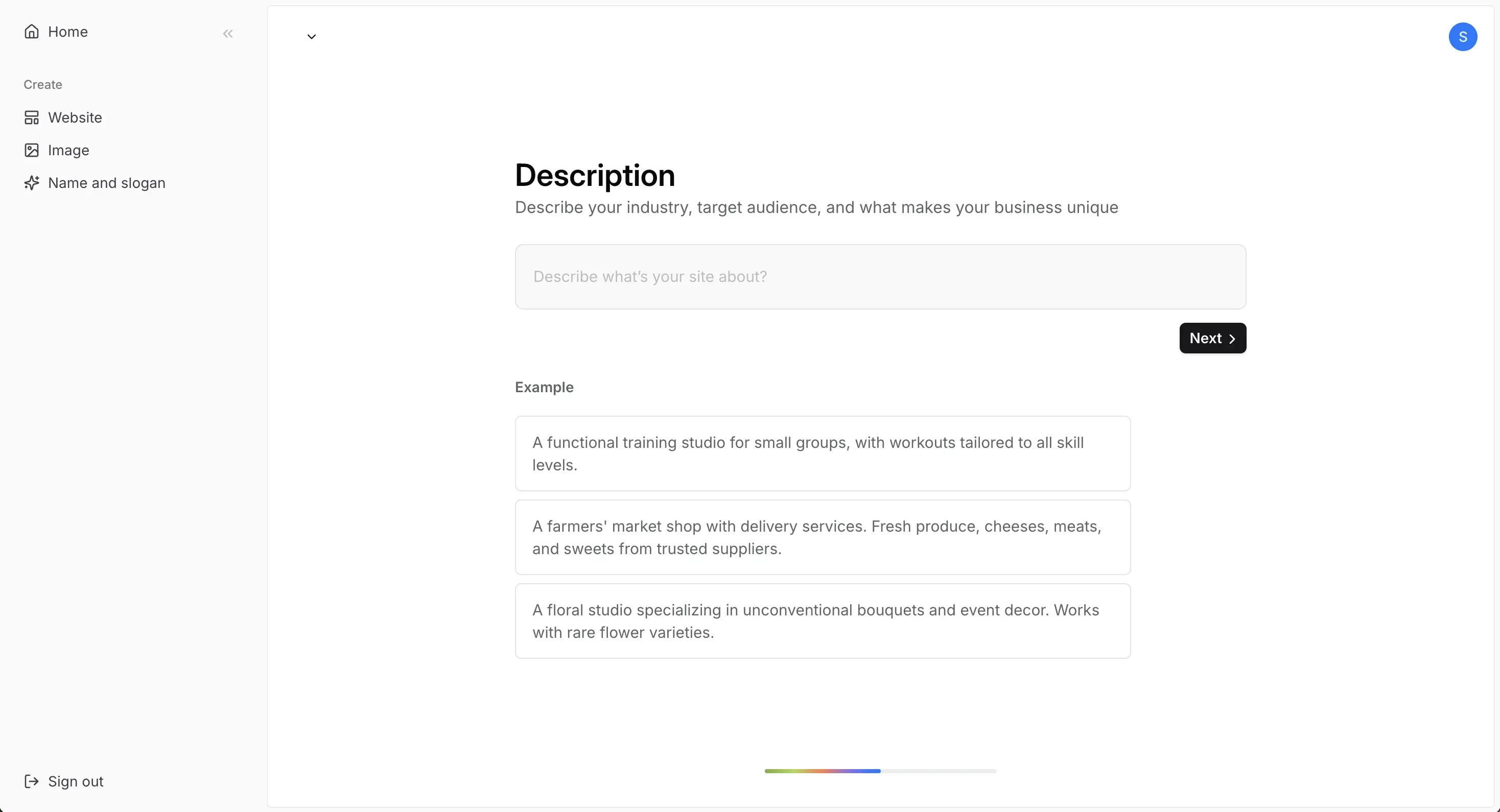
You only need to describe your agency briefly, and Codesi will create your website in full—copy and visuals included. Use its simple website editor to customize the style and rearrange the elements, and, once you’re ready, publish your website instantly.
Codesi offers you a free subdomain with SSL encryption, but feel free to use a custom domain.
You can go from idea to active website in under five minutes.
Try Codesi today and start building your agency website for free.
FAQ
Should you hire a web development agency or do it yourself?
It depends on your budget, timeline, and the level of control you want.
Hiring a web developer saves you time and ensures polished results, but it’s costly, and you’ll depend on them for future changes. Building it yourself gives you full control and is more affordable, especially with tools like Codesi that require no coding skills.
How much does it cost to build an agency website?
Hiring professionals may cost anywhere from a few hundred to thousands of dollars. DIY website builders range from $0 to about $100, depending on the number of features you need.
You’ll also need to pay a subscription fee for hosting.
With Codesi, you can build your website for free with the basic plan. If you want more features, such as additional image generation and a custom domain, you can upgrade to one of the paid plans, starting at $16/month.
How long does it take to build an agency website?
A professional may deliver your website in a few weeks or a few months. Creating the website yourself using a website builder may require anywhere from a few days to a few weeks, depending on your skill level. An AI-powered tool like Codesi allows you to get a complete agency website in minutes and with minimal effort.
Create your website with AI today
Codesi is a platform where you can make a website in 3 minutes.
No coding, no designers, no hassle - just AI.