Back to blog
Homepage vs. Landing Page: What's the Difference? [+Examples]
Explore homepage vs landing page examples and learn how to create focused, high-converting pages that turn your visitors into loyal customers.

Oct 6 2025
![Homepage vs. Landing Page: What's the Difference? [+Examples]](https://codesi.ai/admin/static/Cover_892cdd25ff.png)
Clicks don’t mean much if they never turn into sign-ups or sales. Recent data shows that landing pages convert at an average of 26%, proof that where you send traffic matters as much as how you get it.
When comparing homepage vs landing page, the difference is focus. A homepage helps visitors explore your brand and choose their next step, while a landing page narrows attention to a single action and removes everything else.
In the sections that follow, you’ll see what makes each page type effective, when to send traffic to one over the other, and how to use Codesi to build both without wasting time.
Key Takeaways
- A homepage works best for people who want to explore your brand, products, and resources at their own pace.
- A landing page is better when you want visitors to take one specific action, like signing up or starting a trial.
- The traffic source matters. Ads and emails usually perform better when sent to a landing page; brand searches and referrals fit a homepage.
- Codesi makes both easy to build, so you can match the right page to the right traffic without waiting on a developer.
What is a Homepage?
A homepage is the main entry point to your site. People land here when they search for your brand, type your URL directly, or click a mention from another site. Unlike a landing page, it does not push for one action. It gives visitors a full view of your business and lets them decide where to go next.
A good homepage typically includes:
- Headline and value statement
- Navigation to important sections such as products, pricing, or support
- Highlights of your primary offers or services
- Trust elements (testimonials, press mentions, logo)
- Footer including links, policies, and contact information
When to Send Traffic to Your Homepage
Your homepage is best for people who want to explore and understand your brand. Send traffic here when:
- Visitors are from organic search with mixed intent
- Someone types in your brand name
- Customers require access to accounts, help or documentation
- An extensive campaign is focused on awareness rather than one conversion
The homepage helps people to understand your offerings before they make a commitment.
What is a Landing Page?
A landing page is a web page built with one job in mind. Unlike a homepage, which lets visitors explore different paths, a landing page keeps their attention on a single offer. That offer might be a free trial, a webinar signup, a discount code, or a newsletter subscription.
Every part of the page works toward that one action. The headline matches the ad or email that brought the visitor there.
A good landing page often includes:
- A headline that matches the ad, email, or link that sent the visitor
- Short copy that explains the offer clearly
- One call-to-action button or form
- Limited or no navigation to reduce distraction
- Proof elements like testimonials or security badges
When to Send Traffic to a Landing Page
A landing page works best when you want people to focus on one clear action. Instead of spreading attention across your whole site, it directs visitors to the exact step you want them to take.
Send people to your landing page if:
- They clicked on a paid ad and expect the page to match the offer
- They came from an email campaign tied to a single promotion
- You are promoting an event and need a page focused on registration
- You are running a limited-time deal and want to eliminate distractions
- You are offering a lead magnet such as a guide, checklist, or report
A landing page is the place for traffic with a clear intent. It matches the promise that brought them there and directs them toward one next step, without menus or competing links.
Homepage vs. Landing Page: The Key Differences
A homepage and a landing page may appear similar on the surface, but they serve different purposes. The table below lays out how they compare:

Each page type has its place. A homepage works when you want to tell your story and give options, while a landing page is built for speed and focus.
Real-World Examples of Homepages and Landing Pages
Looking at live examples makes it easier to see how homepages and landing pages work differently in practice.
Homepage Examples
Stripe

Stripe’s homepage sets the tone quickly with a headline that explains its value and a strong call-to-action to get started. The navigation bar helps different audiences, from developers to finance teams, move straight to products, pricing, or documentation.
Customer logos and proof points are placed where visitors can see them without scrolling far. It is a homepage designed to guide multiple kinds of visitors to the next step.
Notion

Notion takes a slightly different approach. Its homepage opens with a clean headline, a brief explainer, and a way to sign up or request a demo right away. The navigation leads to product details, pricing, and resources, while proof elements like logos reassure new visitors. It works because it gives both new and returning users clear paths without overwhelming them.
Landing Page Examples
Mailchimp

Mailchimp’s free sign-up page has a very different feel. There is one clear focus: create an account. The form is placed prominently above the fold, supported by short, benefit-focused copy that reminds you what you get once you sign up. Distractions are kept to a minimum, so all attention stays on completing the form.
Miro

Miro’s landing page follows a similar pattern. The first thing you see is the sign-up form, paired with microcopy that highlights benefits and builds confidence. Only the essentials remain on the page, such as a note about security and team adoption. Everything is laid out to make the next step simple and fast.
Homepage vs Landing Page: Metrics That Matter
Deciding between a homepage and a landing page is only half the job. The other half is checking if each one is working the way you expect.
A homepage should help people find their way around. That means the most useful numbers are the ones that show movement rather than quick wins:
- Navigation clicks: Are people using the menu to get to product or pricing pages?
- Scroll depth: How far do they go before leaving? Do they stop at the top, or keep moving through the content?
- Site search: Frequent use may suggest your navigation isn’t clear enough.
- New vs. returning behavior: Returning visitors often want account access or support. New visitors should be finding product or pricing details.
- Assisted conversions: Even if the sale happens later, did the journey start on the homepage?
A landing page works differently. It’s measured almost entirely on whether people take the one action it asks for:
- Conversion rate: The single clearest measure of success.
- Cost per lead or sale: Especially important when you’re paying for clicks.
- Form completion: If many start but few finish, the form is too long or confusing.
- Bounce rate: A high rate often points to slow load times or a weak match between ad and page.
- Time to first interaction: A sign of how quickly visitors are engaging with the call to action.
Common Mistakes That Affect Homepage and Landing Page Results
Even strong designs can underperform if the page isn’t aligned with how people arrive. The problems tend to show up in different ways depending on the type of page.
Common Homepage Mistakes
Your homepage should tell visitors about your brand without overwhelming them. Here are some common mistakes to avoid:
- Sending ad traffic to the homepage instead of a dedicated landing page. Visitors expect to see the offer they clicked, not dig through menus to find it.
- Overloading the navigation bar with too many choices. People get stuck when everything competes for attention.
- Weak headlines at the top of the page. If the opening line doesn’t explain what the company does, many visitors won’t scroll further.
Common Landing Page Mistakes
Below are some of the common landing page mistakes to avoid:
- Letting extra links, menus, or multiple calls to action creep in. Each distraction pulls focus away from the main goal.
- Headlines that don’t match the ad or email copy. Even small mismatches raise bounce rates.
- Asking for too much information up front. A form with ten fields feels like work; a short form feels like progress.
One mistake both page types share is forgetting the mobile experience. 62% of web visits come from phones, yet many pages are still designed with desktop layouts first. A homepage with crowded menus or a landing page with a slow-loading form can quickly lose conversions on a small screen.
How Homepages and Landing Pages Work Together
A homepage and a landing page do different jobs, but they support each other when used well. The homepage gives visitors the big picture. It shows what your brand is about and points people in different directions. A landing page does the opposite: it limits choice so the visitor focuses on one action.
Here’s how the balance plays out:
- Send ad traffic to a landing page that matches the offer. If someone clicks on a discount ad, the page they see should highlight that discount and nothing else.
- Keep the homepage as the main entry point for people searching for your brand. From there, they can explore products, services, or resources at their own pace.
- Use the homepage to highlight important landing pages during campaigns. For example, a banner at the top can link directly to a seasonal promotion or sign-up form.
Thinking about homepage vs. landing page as a team effort makes it easier to send visitors to the right place. The first builds trust and context, the second helps you capture the moment when someone is ready to act.
Build the Right Page with Codesi
Choosing between a homepage and a landing page matters, but building them quickly is where most people get stuck. Designers cost money, templates often feel clunky, and waiting weeks slows campaigns. Codesi removes those barriers.
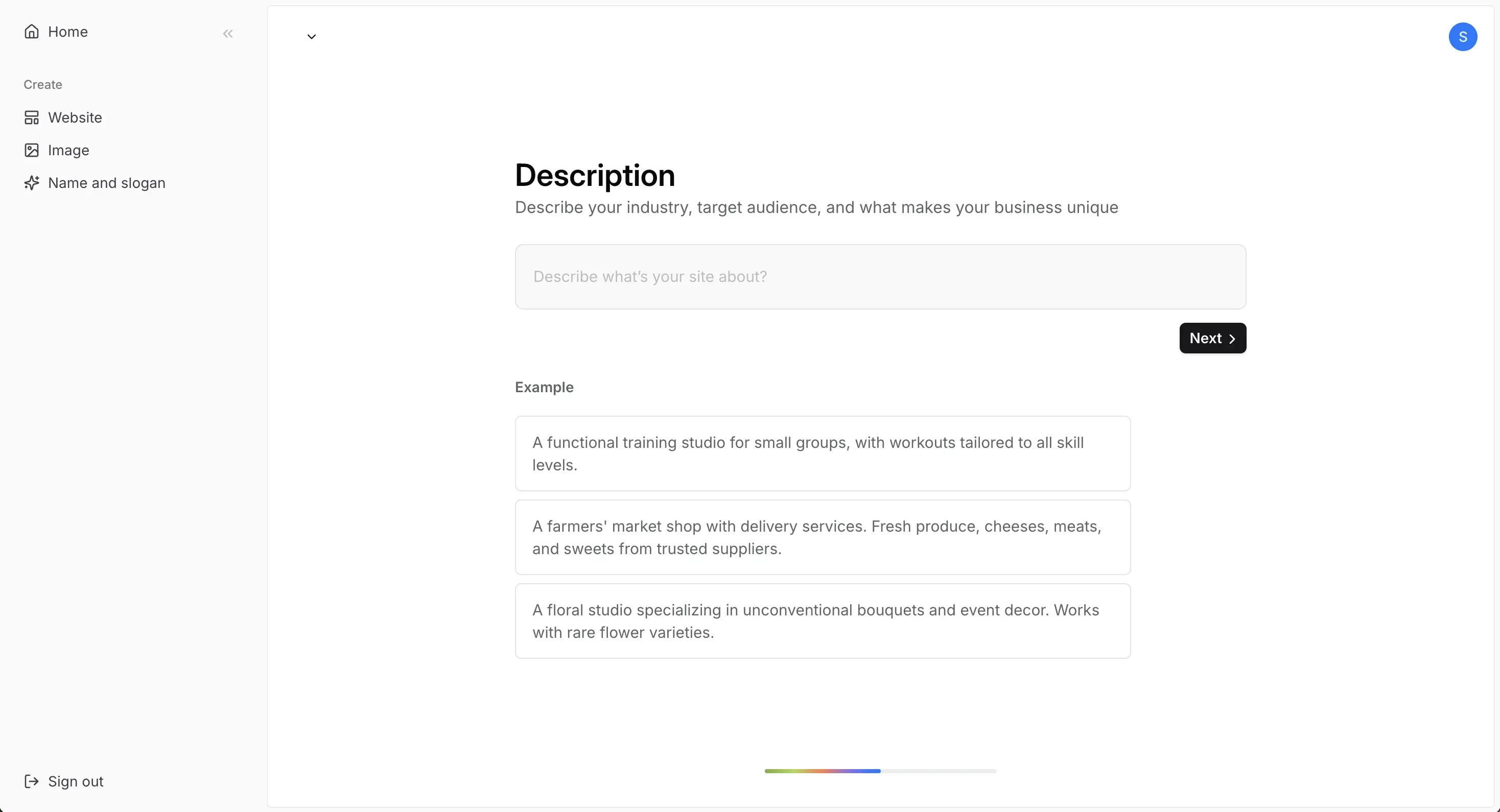
You start with a short prompt about your business or campaign. In minutes, you’ll have a working page with layout, copy, logo and images. From there, you can:
- Launch a homepage that introduces your brand, highlights products or services, and directs visitors to the right place.
- Publish a landing page designed for a single action such as a sign-up, a free trial, or an event registration.
- Edit text, swap visuals, or rearrange sections with a simple drag-and-drop editor.
- Connect your own domain so the page feels polished and ready to share.
The difference is speed. What used to take weeks now takes minutes. That’s why Codesi is one of the best choices if you want to create a landing page, build a homepage, or even design a professional logo without extra tools.
Ready to stop waiting on designers?
Start free with Codesi and get your next page live today.
FAQs
How Many Landing Pages Do I Need?
As many as you have unique offers or audiences. A single landing page can’t serve every campaign well.
Can I Send Ads to My Homepage?
You can, but you’ll often lose clicks because homepages have too many paths. Ads tend to work better when they lead to a page built for one goal.
What Should I Measure on Each Page?
Landing pages: conversion rate, cost per lead or sale, and form completions. Homepages: clicks to key sections, time on site, and return visits.
How Does Codesi Help with Both?
You write a short prompt and Codesi generates a complete one-page site. From there, you can edit it into a homepage for discovery or a landing page for a campaign and publish in minutes.
Create your website with AI today
Codesi is a platform where you can make a website in 3 minutes.
No coding, no designers, no hassle - just AI.