Back to blog
8 Best Framer Alternatives for Website Creation & Design
Discover the best Framer alternatives to build your website faster with simpler tools, full creative control, and professional results.

Jan 8 2026

Framer lets designers build interactive websites without writing code from scratch. The platform works well for designers who want control over every detail, from animations to responsive breakpoints.
But not every project needs that level of control. Some users want faster launches, while others need simpler interfaces or lower costs. Some designers eventually conclude that the platform doesn't match what they're actually building.
This guide covers eight Framer alternatives for website creation and design, from AI-powered builders to traditional template platforms.
Why Users Look for Framer Alternatives
Framer works for designers who value control and have time to learn the platform. But several common scenarios push users toward different tools:
- Pricing structure: The Basic plan includes one CMS collection. Most portfolio sites need two collections (projects and blog posts), forcing an upgrade to Pro.
- Learning curve: Framer assumes you understand auto-layout, responsive breakpoints, and component architecture. Beginners spend weeks learning concepts that don't matter for simple sites.
- CMS limitations: The platform supports basic blog functionality but is limited in terms of usage, advanced categorization, and built-in search.
- No native ecommerce: Selling products requires Shopify or Ecwid integrations, adding setup time and monthly costs.
- Template complexity: Changing Framer templates means working with stacks, constraints, and breakpoints. Other builders let you edit without having to understand the architecture.
8 Best Framer Alternatives to Try in 2026
The comparison table below shows where each alternative fits based on primary use case, main limitation, and starting price.

1. Codesi

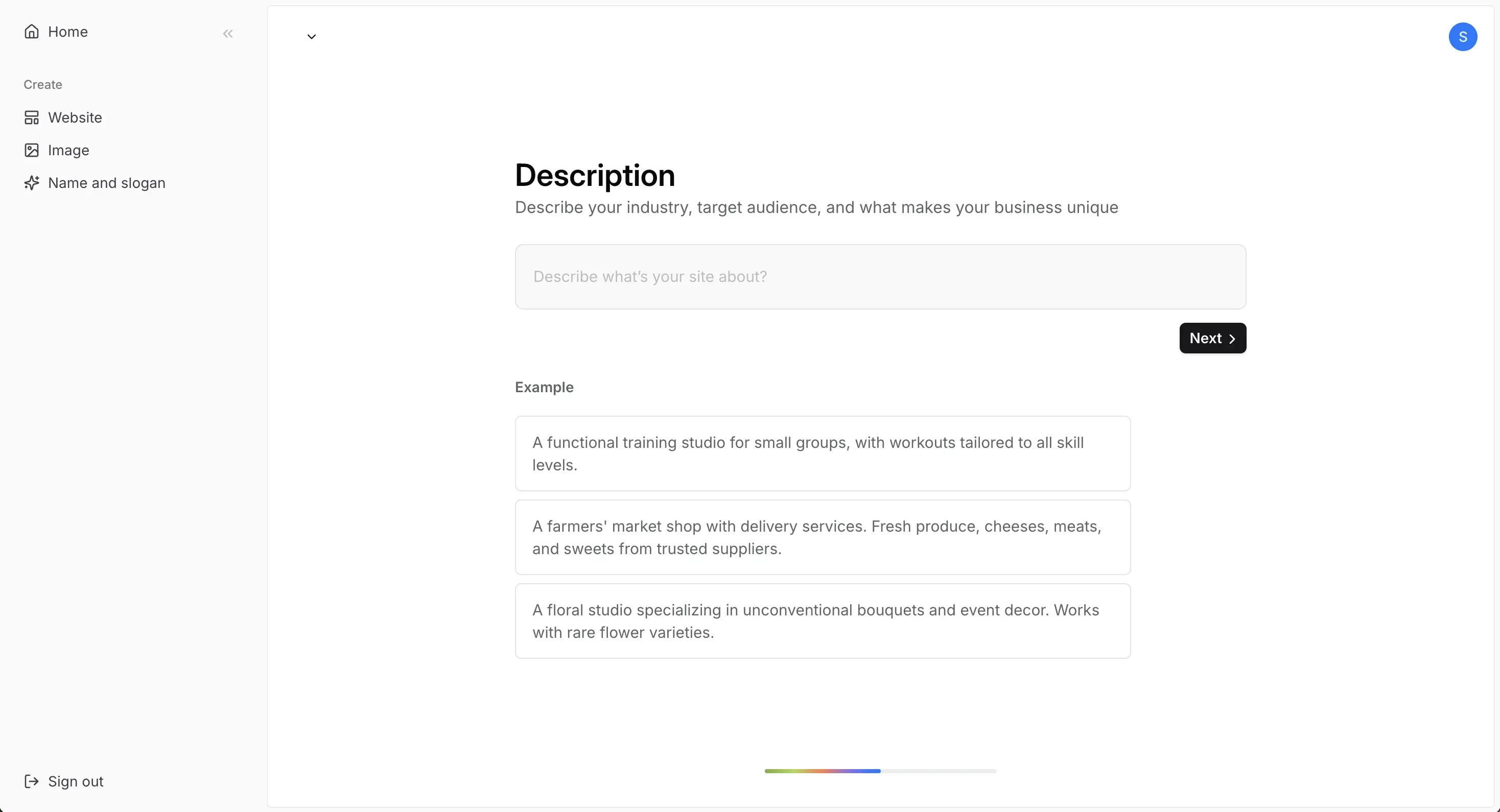
Codesi is an AI-powered website builder that helps you create complete one-page sites from text prompts in minutes. Small business owners launching their first site and solopreneurs building personal brands use it when they need a professional web presence without spending weeks learning design tools.
Key Features
- AI site generation: Creates branded websites with editable sections from a single text prompt without requiring design knowledge
- Logo creation: Produces multiple logo variations with different color schemes and style options that match your brand automatically
- Custom image generation: Builds visuals tailored to your content and brand style without using stock photo libraries
- Domain and hosting setup: Connects custom domains and handles hosting configuration through a single dashboard
- Analytics tracking: Integrates directly with Google Analytics and Yandex for monitoring visitor behavior and site performance
Pros
- Eliminates design decisions by automating layout choices and brand consistency
- Provides working sites before most platforms finish template selection
- Includes logo design and custom images without additional subscriptions
Cons
- Focuses on single-page sites rather than complex multi-page architectures
- Restricts complex site structures with extensive navigation needs
Pricing
Codesi offers a free plan with one website generation per day. Paid plans start at $16/month with advanced features and unlimited generations.
2. Dorik

Dorik is an affordable, beginner-friendly website builder that combines AI generation with drag-and-drop editing for small businesses and personal projects. It serves users who want rapid deployment and white-label capabilities without enterprise-level complexity.
Key Features
- Pre-built UI blocks: Provides over 250 customizable blocks and templates to accelerate design work
- White labeling: Allows agencies to build client projects under their own brand name
- Integrated CMS: Manages blogs and dynamic content through a user-friendly content management system
- Code export: Enables downloading the complete website code to avoid platform lock-in
- Membership features: Creates exclusive, members-only content areas with recurring revenue management
Pros
- Removes learning barriers with an intuitive interface designed for complete beginners
- Offers pricing that is significantly lower than that of established competitors
- Includes unlimited storage and bandwidth on most plans
Cons
- Lacks extensive e-commerce features compared to dedicated platforms
- Provides a smaller template selection than other website builders
Pricing
Dorik offers a free plan with basic features. Paid plans start at $29/month for Personal, and $59/month for Business. The Agency plan includes a custom quote.
3. Webflow

Webflow is a visual development platform and Framer alternative that gives designers code-level control through a drag-and-drop interface. Design-focused teams and developers who want pixel-perfect layouts and clean code output choose Webflow when they need advanced CMS capabilities and are willing to invest time in mastering the platform.
Key Features
- Visual development interface: Provides direct control over HTML, CSS, and JavaScript through drag-and-drop without writing code manually
- Integrated CMS: Manages complex content structures with up to 10,000 items and 40 collections on the Business plan
- Code export capability: Generates clean, semantic HTML and CSS files for handoff to development teams
- Built-in interactions: Creates animations and micro-interactions without JavaScript knowledge
- Global CDN hosting: Delivers sites through a worldwide content delivery network with automatic SSL certificates
Pros
- Provides unmatched design control for creating pixel-perfect custom layouts
- Produces production-ready code that developers can work with directly
- Scales effectively for complex projects with extensive content requirements
Cons
- Requires understanding CSS concepts, like flexbox and grid, to reach full potential
- Costs significantly more than basic builders as projects and needs grow
Pricing
Webflow offers a free Starter plan limited to the webflow.io subdomain. Paid site plans start at $18/month for Basic, or $14/month when billed annually.
4. Squarespace

Squarespace is a design-focused Framer alternative known for professionally styled templates and straightforward editing tools. Photographers, creatives, and small businesses choose Squarespace when they need visual polish rather than technical customization.
Key Features
- Designer templates: Delivers professionally designed, mobile-responsive themes that provide instant visual quality
- All-in-one platform: Bundles website building, e-commerce, email marketing, scheduling, and analytics in a single subscription
- Built-in marketing suite: Includes SEO tools, email campaigns, social media connections, and AI-powered content assistance
- E-commerce management: Handles physical products, digital downloads, subscriptions, and service bookings with inventory tracking
- 24/7 support: Provides round-the-clock customer assistance through email and live chat
Pros
- Removes technical barriers with an interface designed for beginners
- Delivers consistently high-quality templates that make websites look professional
- Consolidates essential business tools in a single platform
Cons
- Restricts deep customization and offers limited third-party plugin options
- Prevents template switching after launch
Pricing
Squarespace doesn't have a free plan, but it offers a 14-day trial. Paid plans start at $25/month for Basic, $36/month for Core, $56/month for Plus, and $139/month for Advanced. Discounts apply when billed annually.
5. Wix

Wix is a beginner-friendly website builder that combines drag-and-drop editing with AI assistance and an extensive app marketplace. Small businesses, freelancers, and first-time site builders choose Wix when they want template variety and all-in-one functionality without learning technical concepts.
Key Features
- Drag-and-drop editor: Arranges elements visually without requiring coding knowledge or technical setup
- Template library: Provides hundreds of industry-specific designs customizable for different business types
- App marketplace: Extends functionality through third-party integrations for bookings, events, marketing automation, and business management
- Wix ADI (Artificial Design Intelligence): Builds a complete website automatically through a questionnaire about business goals and style preferences
- E-commerce platform: Manages online stores with inventory tracking, payment processing through Wix Payments, and shipping configuration
Pros
- Eliminates technical barriers with an interface specifically designed for non-technical users
- Offers extensive template selection spanning multiple industries and use cases
- Bundles hosting, security, and domain management in a single subscription without separate services
Cons
- Prevents template switching after the website goes live
- Produces sites that sometimes load slower than competitors, especially with heavy design elements
Pricing
Wix offers a free plan with Wix branding and a subdomain. Paid plans start at $17/month.
6. Jimdo

Jimdo offers two different building paths: AI-powered Dolphin for automated creation and Creator for manual control. Budget-conscious beginners and small business owners choose Jimdo when they prioritize speed and affordability over advanced customization and complex features.
Key Features
- Dual editor options: Provides AI-powered Dolphin for automated setup and Creator for traditional manual building
- Logo creation tool: Generates brand identities directly within the platform
- Mobile-responsive templates: Delivers sites that automatically adapt to smartphones and tablets
- Zero transaction fees: Keeps 100% of online store revenue
- GDPR compliance tools: Includes cookie management and privacy features for European regulations
Pros
- Removes complexity with a low learning curve that is ideal for absolute beginners
- Costs significantly less than premium builders while maintaining essential functionality
- Loads quickly and performs well on mobile devices
Cons
- Offers limited advanced features
- Restricts design flexibility
Pricing
Jimdo offers a free plan with Jimdo branding. Paid website plans start at $11/month, billed annually.
7. CodeDesign

CodeDesign converts text descriptions into fully responsive websites with built-in hosting and code export capabilities. Beginners and small teams opt for CodeDesign when they want rapid deployment with the option to download code for self-hosting or further development.
Key Features
- Lifetime deal availability: Offers one-time payment options for permanent platform access without recurring subscriptions
- No-code customization: Provides a drag-and-drop editor for adjusting branding, colors, fonts, and imagery without technical knowledge
- Code export option: Allows downloading generated HTML, CSS, and JavaScript for self-hosting or custom development work
- Built-in SEO tools: Integrates optimization features to improve search engine visibility directly within the platform
- Multi-device responsiveness: Ensures sites display properly across desktops, tablets, and mobile devices automatically
Pros
- Provides significantly faster deployment than traditional builders
- Delivers a strong value proposition, particularly through lifetime deal offerings
- Provides responsive customer support praised by the user community
Cons
- Struggles with highly complex web applications requiring advanced functionality
- Offers fewer third-party integrations compared to some other platforms
Pricing
CodeDesign offers four pricing tiers, starting at $9/month, with a 7-day money-back guarantee.
8. Hostinger Website Builder

Hostinger Website Builder bundles website creation, hosting, and domain management into a single low-cost package. Budget-conscious beginners and small business owners choose Hostinger when they want a streamlined setup with included infrastructure at significantly lower prices than standalone builders.
Key Features
- Grid-based drag-and-drop: Arranges content blocks through a visual interface without coding requirements
- Bundled infrastructure: Includes web hosting, a free domain for the first year, SSL certificates, and email accounts in the subscription
- Content creation tools: Provides AI copywriting assistance, logo maker, stock photo library, and basic image editing
- E-commerce capabilities: Supports online store setup with product management and payment processing
- All-in-one infrastructure: Bundles hosting, domain registration, SSL certificates, and business email in a single subscription
Pros
- Offers low introductory pricing for multi-year commitments
- Eliminates setup complexity with all essential services bundled in a single purchase
- Accelerates site development with AI assistance and pre-configured hosting
Cons
- Prevents changing templates after initial selection
- Requires upfront payment commitment, with no free plan available
Pricing
Hostinger Website Builder offers no free plan. Paid plans start at $12.99/month or $3.49 when billed annually.
Why Codesi Is the Best Framer Alternative
Framer gives designers granular control over animations and interactions, but that level of detail comes at a cost. You might spend days learning stacks, constraints, and responsive breakpoints before publishing anything.
Codesi cuts through that complexity. Describe your business in a few sentences, and the platform generates a complete site with branding, layout, images, and hosting ready to publish.
With Codesi, you get the following:
- Site structure and layout decisions are made instantly, not after hours of frame arrangement
- Logo and custom AI images created without external tools or stock photo subscriptions
- Brand consistency is maintained automatically across every section
- Domain connection and analytics setup are handled in one dashboard
You still control the details. Swap images, edit copy, adjust colors, and rearrange blocks. The difference is that you start with a working site instead of an empty canvas.
For straightforward business sites, portfolios, or product launch pages, Codesi gets you live faster. When you need high-converting layouts without mastering design systems, the platform handles what slows down most launches.
Why spend weeks learning software when you could be running your business instead?
Try Codesi today and publish your website in minutes.
Create your website with AI today
Codesi is a platform where you can make a website in 3 minutes.
No coding, no designers, no hassle - just AI.