Back to blog
The 8 Best E-commerce Website Builders [2026 Comparison]
Discover the best E-commerce website builders and compare fast, mobile-ready tools that help you launch quicker and reduce cart drop-offs.

Jan 15 2026
![The 8 Best E-commerce Website Builders [2026 Comparison]](https://codesi.ai/admin/static/Cover_48_52bc186ce2.webp)
The average cart abandonment rate is around 74.8%, which means that roughly seven out of ten shoppers leave without buying anything. If your checkout page takes more than two seconds to load, most customers will just close the tab and look elsewhere.
Slow speeds, complicated checkouts, and poor mobile experiences turn interested buyers into lost revenue.
The right e-commerce platform prevents these problems. Modern builders handle payment processing, inventory management, and mobile optimization automatically, so technical issues don't kill your conversions.
This guide compares eight e-commerce website builders based on features, pricing, and benefits.
What Makes a Great E-commerce Website Builder in 2026
A great e-commerce builder needs three core features that directly affect whether visitors complete their purchase:
- Payment processing: Accept credit cards, digital wallets, and buy-now-pay-later options without sending customers to external checkout pages.
- Inventory management: Track stock automatically across your website, social media shops, and marketplaces. Real-time updates prevent selling out-of-stock products.
- Mobile optimization: Load quickly and display properly on phones. With 76% of e-commerce traffic in the US coming from mobile devices, slow or broken mobile experiences can make you lose more than half of your potential customers.
E-commerce builders in 2026 also include new capabilities that separate modern platforms from older ones. For instance, many of them use AI tools to generate product descriptions and compress images to improve loading speed.
8 Best E-commerce Website Builders to Consider in 2026
The right e-commerce platform depends on your business needs. This table shows which builder works best for different situations:

1. Codesi

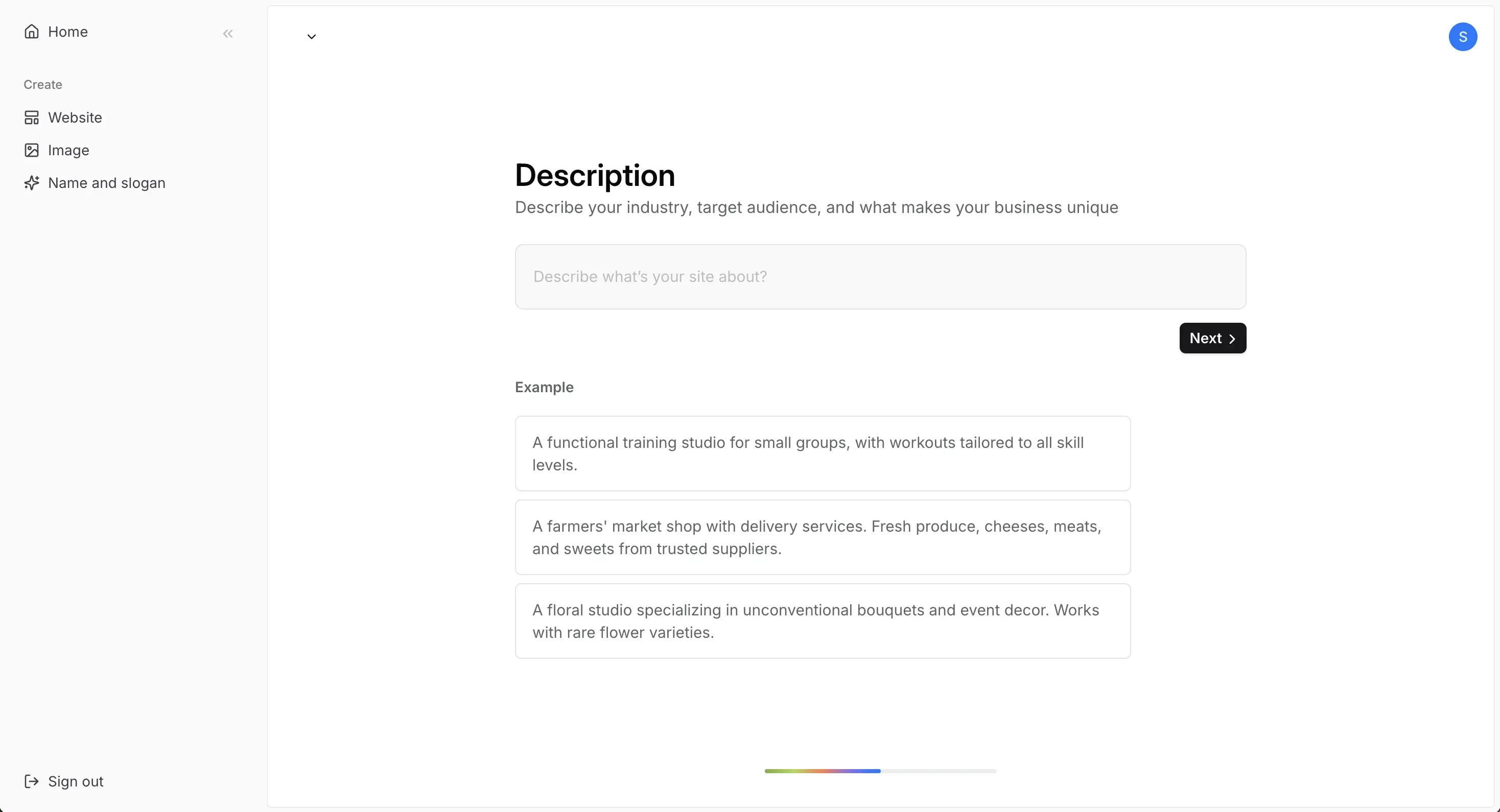
Codesi generates a complete e-commerce page in minutes through AI, eliminating the technical setup that delays most store launches. You describe your product, and the platform automatically builds the page with product sections, forms, CTAs, logos, and optimized AI images.
Key Features
- AI-powered page generation: Creates a complete landing page with product sections, forms, and CTAs in under three minutes
- Built-in speed optimization: Compresses images and minimizes code automatically to load pages in under two seconds
- Mobile-responsive design: Generates layouts that work correctly on phones and tablets without a separate mobile configuration
- Logo and image creation: Produces custom AI images and logos that match your brand without sourcing graphics separately
- Lead capture forms: Collects customer emails and information for product interest before inventory arrives
Pros
- Launches stores faster than traditional builders
- Works well for validating product ideas before manufacturing
- Eliminates the need for separate design and development tools
Cons
- Focuses on landing pages rather than full multi-product stores
- Lacks advanced inventory management for large catalogs
Pricing
Codesi offers a free plan with one website generation per day. Paid plans start at $16/month, or $12/month when billed annually, with 50 website generations and custom domain support.
2. Shopify

Shopify provides tools for entrepreneurs and businesses to build, manage, and grow online stores regardless of their technical skills. The platform handles website design, payments, shipping, and marketing through an all-in-one system that works for both online and in-person sales.
Key Features
- Drag-and-drop website builder: Customizes themes through a visual interface
- Integrated payment processing: Accepts payments through Shopify Payments or connects with various third-party processors
- App marketplace: Adds functionality through thousands of apps for SEO, marketing, accounting, and shipping
- Multichannel selling: Manages sales across social media, marketplaces like Amazon, and physical retail locations
- 24/7 customer support: Offers helpful resources like Shopify bundles app and Shopify Academy training materials
Pros
- Suits both small startups and large enterprise brands
- Sets up stores quickly with minimal technical knowledge required
- Expands capabilities through an extensive app ecosystem
Cons
- Restricts customization options for those without coding knowledge
- Makes migrating to another platform difficult once the store is established
Pricing
Shopify's plans cost $27/month (Basic), $72/month (Grow), and $399/month (Advanced). Shopify Plus starts at $2,300/month for enterprise businesses. New users get their first three months for $1/month.
3. Wix

Wix combines drag-and-drop website building with e-commerce functionality, allowing businesses to create online stores without coding. The platform manages up to 50,000 products through its visual editor and connects with over 80 payment gateways to process transactions.
Key Features
- Drag-and-drop editor: Customizes over 900 templates through a visual interface
- Wix Payments: Processes payments through an integrated system that accepts credit cards, Apple Pay, Google Pay, and buy-now-pay-later options
- Extensive payment gateway support: Connects with 80+ third-party processors, including PayPal, Stripe, and Square
- Abandoned cart recovery: Sends automated emails to remind customers about incomplete purchases
- Multichannel selling: Manages sales across social media platforms and marketplaces from one dashboard
Pros
- Sets up stores quickly with minimal technical knowledge required
- Offers more payment gateway options than most competitors
- Includes 24/7 customer support and extensive help resources
Cons
- Restricts template switching after site launch
- Requires apps for advanced features, adding monthly costs
Pricing
Wix has a free plan, and paid plans start at $17/month. The e-commerce options start at $29/month for the Core plan, which includes basic selling features. All plans include a free domain for one year and a 14-day money-back guarantee.
4. Squarespace

Squarespace focuses on design-forward e-commerce with professionally built templates and visual customization tools. The platform sells unlimited products across all plans and processes payments through integrated gateways, including Stripe and PayPal.
Key Features
- Unlimited product listings: Sells physical products, digital downloads, services, and gift cards without product limits
- Drag-and-drop Fluid Engine editor: Customizes store layouts and product pages through a visual interface
- Integrated inventory management: Tracks stock levels with unlimited stock keeping units (SKUs), low-stock alerts, and multi-dimensional product variants
- Abandoned cart recovery: Sends automated emails to customers who leave items in their cart
- Flexible shipping options: Supports local pickup, delivery, and carrier-calculated shipping rates with label printing
Pros
- Offers over 180 professionally designed templates focused on visual appeal
- Provides built-in SEO tools, including AI-powered title and description optimization
- Includes 24/7 customer support via email and live chat during business hours
Cons
- Restricts template switching after launch
- Limits advanced inventory features
Pricing
Squarespace plans start from $25/month or $16/month when paid annually. The Core plan is $36/month (or $23/month on an annual plan), and offers 0% transaction fees. All plans include a free domain for one year and a 14-day free trial.
5. BigCommerce

BigCommerce provides built-in e-commerce features designed for businesses planning to scale beyond basic online selling. The platform includes advanced SEO tools, multichannel selling, and unlimited product listings across all plans, with no transaction fees on sales.
Key Features
- Multichannel selling: Manages sales across social media platforms, Amazon, eBay, and your website from one dashboard
- Advanced SEO tools: Includes custom URLs, automatic sitemap generation, and microdata optimization on all plans
- Unlimited products and staff accounts: Unlimited listings and accounts available even on entry-level plans
- Product filtering and search: Provides advanced filtering options for customers to find products quickly
- Robust reporting: Tracks sales performance, customer behavior, and inventory across all channels
Pros
- Saves money by eliminating transaction fees as sales volume increases
- Handles complex product catalogs with unlimited SKUs and variants
- Provides a strong SEO foundation for organic traffic growth
Cons
- Has a steeper learning curve
- Enforces sales revenue limits that force plan upgrades when exceeded
Pricing
BigCommerce plans start at $39/month, while Enterprise plans are custom-priced.
6. Square Online

Square Online connects e-commerce with in-person selling through easy integration with Square's point-of-sale (POS) system. The platform automatically syncs inventory, orders, and customer data between online and physical retail locations.
Key Features
- Square POS integration: Unifies inventory management and sales tracking across online store and physical retail locations
- Offline mode capability: Processes sales without an internet connection, syncing transactions when reconnected
- Unified customer data: Tracks customer purchases and preferences across all sales channels in one system
- Flexible product support: Sells physical goods, digital products, and services, with pickup or delivery options
- Built-in marketing tools: Includes SEO optimization and Google/Meta integrations for advertising
Pros
- Works perfectly for businesses already using Square hardware and POS
- Sets up stores quickly without requiring coding or technical knowledge
- Keeps inventory synchronized automatically between online and in-person sales
Cons
- Provides limited design customization compared to dedicated website builders
- Lacks advanced e-commerce features like B2B pricing or complex shipping rules
Pricing
Square Online offers a free plan with transaction fees of 2.6% + 15¢ in-person. Square Plus costs $49/month per location with lower transaction rates. Square Premium costs $149/month per location, with 24/7 support.
7. Hostinger

Hostinger combines budget-friendly pricing with AI-powered website building tools for small e-commerce stores. The platform generates complete store layouts, product descriptions, and images from simple text prompts.
Key Features
- AI content generation: Produces product titles, descriptions, and images from uploaded photos
- Drag-and-drop editor: Customizes store layouts through a visual interface with smart grid alignment
- Printful integration: Handles print-on-demand fulfillment for custom products automatically
- 100+ payment methods: Accepts payments through multiple gateways, including PayPal and Stripe
- Daily backups: Prevents data loss with automated daily and on-demand backup options
Pros
- Sets up stores quickly using AI tools
- Includes a free domain name for the first year (with annual plans)
- Charges zero platform transaction fees, only payment processor fees
Cons
- Limits product catalog to 1,000 items
- Lacks advanced features like subscription sales and product bundles
Pricing
Hostinger plans start at $12.99/month for the Premium plan. The Business plan costs $13.99/month and includes e-commerce features, AI tools, and 50 GB of storage.
8. Shift4Shop

Shift4Shop (formerly 3dcart) provides a comprehensive online store solution with built-in marketing, SEO, and payment features, offering enterprise-level tools at no upfront cost to qualifying merchants.
Key Features
- Unlimited store capacity: Supports unlimited product listings, staff users, bandwidth, and storage without additional fees or upgrade requirements
- Built-in CRM and marketing tools: Includes customer relationship management, email marketing, and abandoned cart recovery without third-party apps
- Advanced SEO capabilities: Offers customizable URLs, dynamic meta tags, and link titles for search engine optimization
- Flexible payment processing: Supports various payment methods, including credit cards, PayPal, purchase orders, cash, and checks
- Comprehensive inventory management: Tracks stock with low-stock alerts and multi-warehouse support
Pros
- Provides enterprise-level features without monthly fees for US merchants using Shift4 payments
- Includes built-in tools, which competitors typically charge for separately
- Supports unlimited products, orders, bandwidth, and staff users on the free plan
Cons
- Features an outdated, clunky interface
- Requires HTML/CSS knowledge for advanced design customization
Pricing
Shift4Shop offers a free plan for US merchants using Shift4 payment processing. Paid plans without the Shift4 requirement start at $29/month for the Basic Store. Free plan includes unlimited products, bandwidth, storage, and over 200 built-in features.
Why Codesi Works Best for Fast E-commerce Launches
Most e-commerce website builders force you to spend weeks on setup before you can start selling. Codesi takes a different approach: You describe your product and get a complete, professional sales page in three minutes.
This speed advantage matters because, while competitors are still configuring payment gateways and customizing themes, Codesi users are already driving traffic and collecting leads.
The platform generates product descriptions, creates branded images, and builds mobile-responsive pages without requiring any technical skills.
Codesi excels in three scenarios:
- Product launches: Get your offer in front of customers immediately. The faster you launch, the faster you learn what resonates with your market.
- Seasonal campaigns: Create dedicated pages for holiday promotions, flash sales, or limited-time offers. Build multiple campaign pages in an afternoon.
- Market testing: Validate demand with real customers before investing heavily in inventory or infrastructure. Launch different product variations to see what sells.
Traditional website builders make you choose between speed and quality. Codesi delivers both. Pages load in under two seconds, convert visitors effectively, and require zero coding knowledge. Codesi handles the technical execution while you focus on your product and marketing.
Ready to launch faster than you thought possible?
Sign up on Codesi and create your first sales page today.
Create your website with AI today
Codesi is a platform where you can make a website in 3 minutes.
No coding, no designers, no hassle - just AI.