Back to blog
7 Best Responsive Website Builders in 2026 [Free & Paid]
Discover the best responsive website builders to create stunning, mobile-friendly sites that adapt seamlessly to every screen and device.

Oct 13 2025
![7 Best Responsive Website Builders in 2026 [Free & Paid]](https://codesi.ai/admin/static/Cover_ceb92d836d.webp)
A visitor’s first impression of your website often depends on how quickly it adjusts to their screen. Reports show that 96.3% of internet users access the internet from mobile devices. This means that unless your site is able to adapt easily to different screens, you’re losing visitors even before they can read or even click. Responsive website builders fix this by automatically changing layouts across screens, so that you don’t need to recreate pages on a device-by-device basis.
To help you create a responsive website with ease, we’ve rounded up the best responsive website builders that you can use in 2026, both free and paid.
Best Responsive Website Builders at a Glance
To get an idea of how the best responsive web builders of 2026 compare in terms of features, pricing, and key limitations, here is a brief overview of the comparison of these platforms:

*All pros and cons are based on user reviews on G2, Trustpilot, Capterra, TrustRadius, and Product Hunt.
1. Codesi

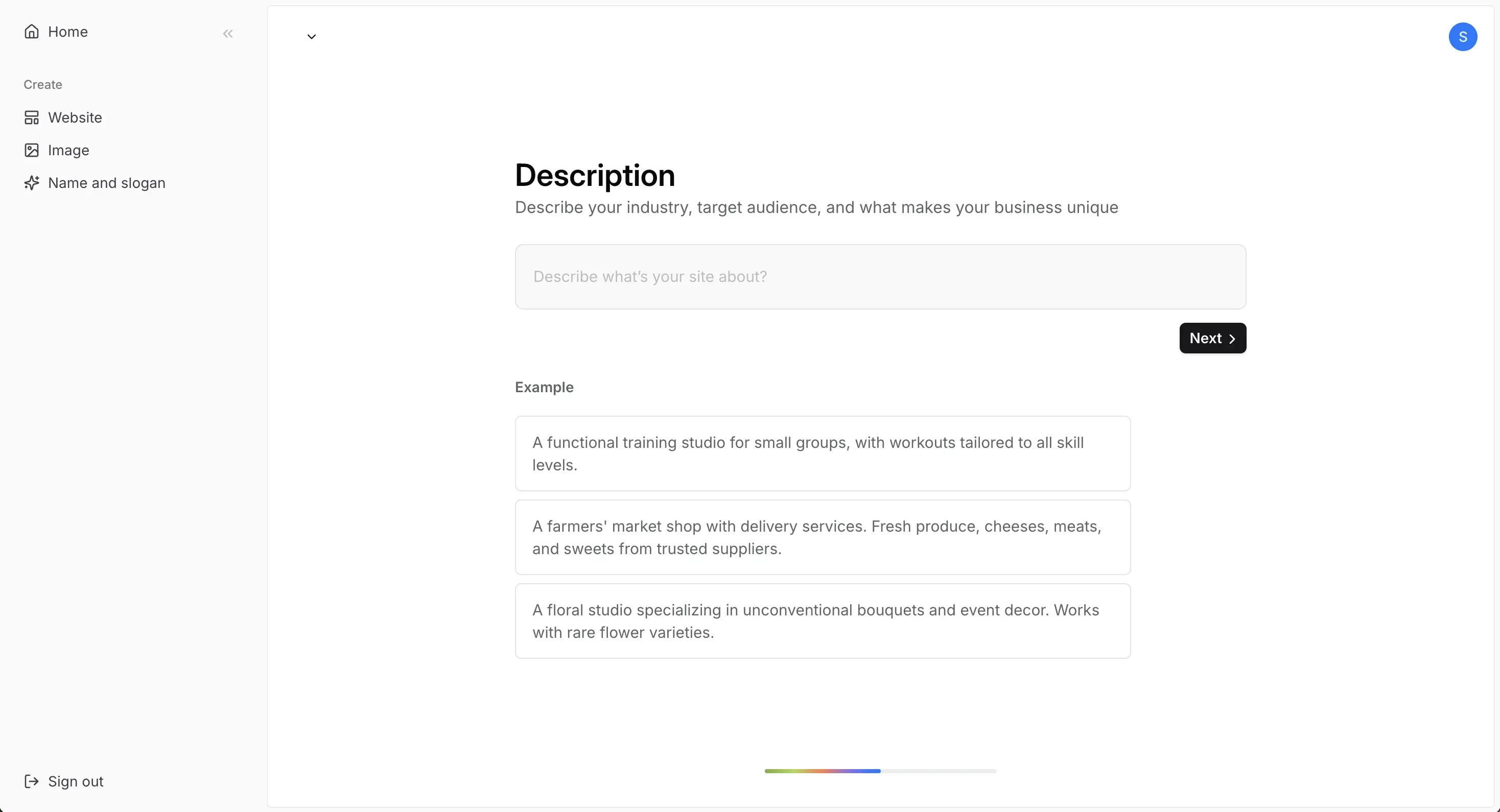
Codesi helps you to create a responsive site within minutes without any code. You enter a brief prompt regarding your project, and it creates a full one-page site with responsive layouts, text, and pictures. It automatically adapts to desktop, tablet, and mobile, meaning you do not need to consider breakpoints.
It has a drag-and-drop interface to edit sections. Change pictures, rephrase text, or change colors with just a few clicks. Codesi also provides integrated SEO fundamentals, hosting, and SSL, so that you do not need to operate any additional services or plugins.
Key Features:
- AI-powered one-page website creation from a prompt
- Responsive layouts that adapt to any device
- Drag-and-drop editor for easy updates
- Built-in logo and image generator for brand consistency
- Domain connection and hosting included
Pros
- Fast way to get a professional site live
- Pages are fully responsive out of the box
- No need for plugins, extra tools, or coding
Cons
- No advanced features
- Free plan limited to three sites
- Best for one-page or small websites rather than large multi-section sites
Pricing
Codesi gives you three free website generations to start. Paid plans are customized to your needs.
2. Wix

Wix is one of the most widely used website builders, praised for its flexibility and large template library. Its drag-and-drop editor makes it easy to customize layouts, and the built-in responsive design ensures that sites look good on both mobile and desktop.
Reviewers like how much control they get, but some mention that the editor can feel heavy over time, especially when managing larger sites.
Features:
- AI site generator and text tools to kickstart pages
- Mobile view with controls for spacing, sizing, and hidden elements
- Large template library and an app marketplace for add-ons
Pros
- Quick setup from an AI prompt or a ready template
- Easy mobile tweaks so pages read well on phones
- Plenty of integrations and extensions through the app market
Cons
You cannot switch templates after publishing; you must start a new site to change
The free plan shows Wix ads and uses a Wix subdomain
Some advanced options take time to learn compared with simpler builders
Pricing
Free plan available with Wix branding. Paid site plans commonly start around $17 per month in the U.S., with higher tiers for extra features.
3. Squarespace

Squarespace is popular for its stylish templates and strong visual appeal, which many creatives and small businesses appreciate. The platform handles responsiveness well, so designs automatically adjust across devices without extra effort.
Some reviewers point out that customization beyond the templates can feel limited, and it may take a bit longer to get comfortable compared to lighter builders.
Key Features:
- Responsive templates by default, with mobile style controls
- Fluid Engine editor for precise section and grid layouts
- Built-in commerce, scheduling, memberships, and blogging
- Image handling with automatic cropping and lazy loading
- SEO and analytics baked in
Pros
- Polished designs that resize well with minimal changes
- All key site tools in one place, so fewer add-ons to manage
- Reliable hosting and SSL included
Cons
- No permanent free plan; you start on a trial, then subscribe
- Some advanced tweaks require custom CSS
- Commerce and scheduling features are tied to higher tiers
Pricing
Free trial available. Paid plans commonly start around the mid-teens per month in the U.S., with higher tiers for commerce and advanced marketing.
4. Webflow

Webflow is popular with designers and teams who want full creative control while keeping sites responsive. The platform uses a visual canvas that mirrors CSS and HTML, so you can adjust layouts for desktop, tablet, and mobile directly.
It’s widely used for marketing sites, product launches, and startups that need responsive designs with custom branding. However, it takes time to fully understand, and higher pricing tiers are trade-offs for that flexibility.
Features:
- Visual editor that maps closely to HTML/CSS structure
- Breakpoint-based design for desktop, tablet, and mobile
- Flexbox and CSS grid support for responsive layouts
- CMS for blogs, case studies, and collections
- Animations, interactions, and reusable components
- Built-in hosting, SSL, backups, and global CDN
- Integrations with analytics, forms, payments, and third-party tools
Pros
- Highly flexible responsive design control
- Professional-grade features without hand-coding
- Reliable hosting built into the platform
Cons
- Steeper learning curve compared with drag-and-drop builders
- Pricing increases for larger teams or sites with higher traffic
- Limited templates
Pricing
Free plan available with Webflow branding. Paid plans start around the low teens per month, with CMS and business features at higher tiers.
5. Weebly

Weebly is a reliable choice for small businesses and personal projects that need a responsive site without the hassle. Its templates automatically adjust for desktop, tablet, and mobile, so you don’t have to design separate versions.
The platform includes built-in tools for e-commerce, blogging, and basic SEO, making it a practical option if you want an all-in-one package at a lower cost. On the flip side, reviewers note that design flexibility feels dated compared to newer platforms, and the feature set isn’t as broad as competitors like Wix or Squarespace.
Key Features:
- Responsive templates that adjust to any device
- Drag-and-drop site editor
- Built-in store with product, shipping, and tax management
- Blog and basic SEO tools
- Free hosting with SSL included
Pros
- Easy to use, good for beginners
- Templates are mobile-friendly out of the box
- Affordable pricing with a solid free plan
Cons
- Limited design options
- Customization feels restrictive for advanced users
- Fewer updates and add-ons compared to competitors
Pricing
Weebly has a free plan with basic features. Paid plans start at $10 per month for the Personal plan, $12 per month for the Professional plan, and $26 per month for the Performance plan (when billed annually).
6. WordPress.com

WordPress.com gives you the reliability of WordPress with hosting included, and most modern themes are mobile-ready out of the box. Users value the range of plugins and the ability to scale from a simple blog to a complex site.
The main drawbacks, according to reviews, are that customization can be overwhelming for beginners and performance often depends on which theme or plugin stack you choose.
Key Features:
- Responsive themes that adapt to any screen size automatically
- Block editor for easy content layout and customization
- Built-in blog, media management, and scheduling tools
- SEO tools and social sharing integrations
- E-commerce options on Business and higher plans
Pros
- Extremely flexible with both simple and advanced options
- Huge library of themes and plugins available on higher plans
- Strong blogging and content management tools
Cons
- Free plan is limited and shows WordPress ads
- Complex customization
- Advanced features often require a higher-priced plan
Pricing
Free plan available (includes WordPress branding). Paid plans start at $4 per month (Personal), $8 per month (Premium), $25 per month (Business with plugins and custom themes), and $45 per month (E-commerce) when billed annually.
7. Hostinger

Hostinger’s Website Builder is a lightweight platform designed for speed and simplicity. It automatically creates responsive websites, so layouts look good on phones, tablets, and desktops without extra effort. The drag-and-drop editor makes changes easy, even for beginners who have no design or coding experience.
Since it’s bundled with Hostinger hosting, you also get reliable performance and free SSL certificates. Reviewers appreciate the low cost, but some mention that advanced design options and features are limited, making it better suited for smaller projects.
Key Features:
- Fully responsive templates with mobile preview
- Drag-and-drop editor with no coding required
- AI tools for text and logos
- Integrated e-commerce with product and payment support
- Hosting and free SSL included in every plan
Pros
- Affordable entry point compared to most competitors
- Fast loading speeds thanks to Hostinger’s infrastructure
- Easy to set up and publish within minutes
Cons
- Difficult to migrate
- Smaller template library than Squarespace or Shopify
- E-commerce features are basic for large stores
Pricing
- Plans start at $2.99 per month (with a free 3-month trial on annual billing).
- Business plans with e-commerce features start at $3.99 per month.
How to Pick a Responsive Website Builder That Fits Your Needs
Not all responsive builders are the same. Some are heavily based on drag-and-drop design, and others are based on pre-built layouts that automatically scale to phones and tablets. In making your decision, concentrate on the information that will have the most impact on your visitors:
- Mobile experience first: Open the template on your phone. Can one read the text without pinching and zooming? Do the buttons have enough spacing between them?
- Editing in real time: Most sites now allow you to edit your site with a mobile application. It will save time in case you update or check analytics outside the office.
- Flexibility of templates: Responsive does not simply mean that it resizes. Find constructors that allow you to manage the arrangement of parts on top or bottom of smaller screens.
- Load speed: A design that appears clean, but loads slowly on 4G, will cost you visitors. Demo tools such as PageSpeed Insights, before you commit.
- Scaling up: When you intend to begin small but later include a store, a blog, or a membership section, verify if the builder is easy to upgrade or requires you to change.
The right builder is not necessarily the one with the longest list of features, but the one that feels comfortable when you preview it on other devices. The same template that appears smooth on the desktop but bulky on the mobile will do more harm than good.
Why Codesi Works Well for Responsive Websites
A site that looks good on desktop but falls apart on mobile will cost you visitors. More than half of all browsing now happens on phones, which means responsive design is a must for anyone serious about traffic and conversions.
Codesi makes this part easy. Rather than fussing with layouts or breakpoints, you can start with a simple prompt and end up with a site that just works with any screen size. The builder does the heavy lifting, meaning that your pages will work equally well on a tablet as they do on a laptop.
Here’s what stands out when you use Codesi:
- Responsive layouts that adjust smoothly across devices
- An easy-to-use editor in which you can edit pages, change images, or reformulate text without writing.
- In-built features such as an AI logo generator to maintain the branding.
- Mobile-friendly landing page templates.
- Free subdomain publishing, or add your own domain within minutes.
For business and creators, it means that you’ll spend less time on mobile troubleshooting and spend more time on what works. Codesi is the tool to help you create something responsive, professional, and traffic-ready, whether it’s a sales page or a basic portfolio.
Ready to get your responsive site online?
Start free with Codesi and publish a responsive website in minutes.
Create your website with AI today
Codesi is a platform where you can make a website in 3 minutes.
No coding, no designers, no hassle - just AI.