Back to blog
9 Best Alternatives to GoDaddy Website Builder in 2026
Explore the best alternatives to GoDaddy website builder to find a platform that gives you more flexibility, control, and room to grow.

Jan 28 2026

GoDaddy Website Builder is widely used, largely because it is bundled with domains and hosting. Usage data shows that it accounts for around 22.3% of the website builder market, making it a common starting point for individuals and small businesses building their first site.
At the same time, many users find that their needs change once a site is live. As projects grow and requirements become clearer, limitations around editing control, layout flexibility, or long-term ownership tend to surface. This has led more people to look beyond the default builder they started with.
This guide reviews the nine best alternatives to GoDaddy Website Builder in 2026.
Each option is reviewed based on how it performs in day-to-day use, where it fits best, and what trade-offs to expect, so you can choose one that matches your needs and plans.
Why Users Consider Alternatives to GoDaddy Website Builder
GoDaddy Website Builder is often chosen for its simplicity and drag-and-drop interface, which many users find easy to use for basic site creation.
However, feedback from users highlights areas where the platform can be limiting. Some reviewers note that customization options are restrictive, making it harder to tailor a site beyond the basics. Users also report that subscription pricing and upgrade prompts can be confusing over time, especially as renewal rates rise.
Because of these constraints, many users seek alternatives. Exploring other options helps you find a platform that fits your specific goals, whether that is stronger design flexibility, better content control, or more transparent pricing.
9 Best Alternatives to GoDaddy Website Builder Compared
Before looking at each platform in detail, the table below provides a side-by-side comparison of the best alternatives to GoDaddy Website Builder:

1. Codesi

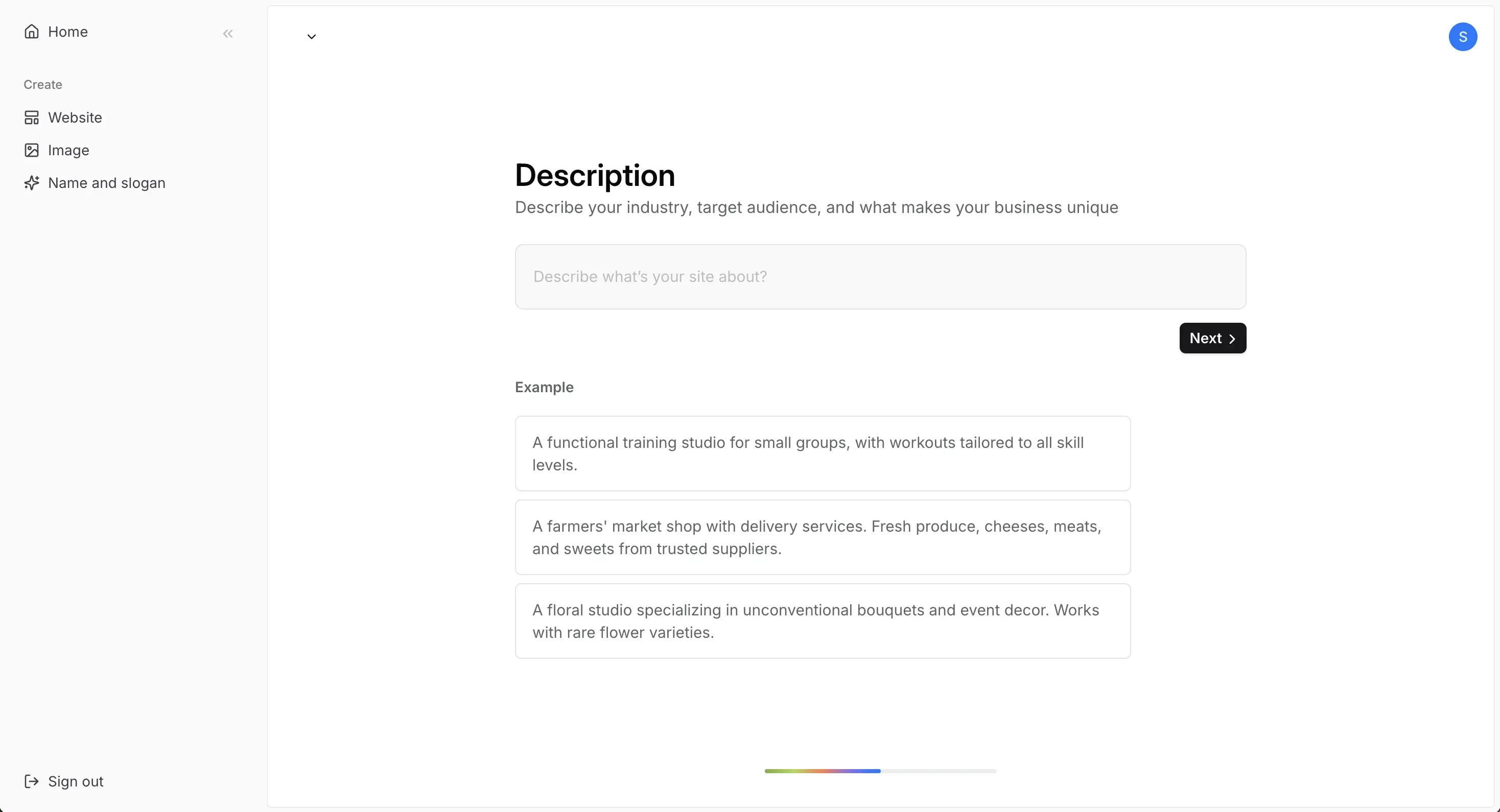
Codesi is one of the best alternatives to GoDaddy Website Builder for freelancers and small business owners who want more control over performance and editing without technical setup. It is well-suited for users who need to publish quickly and manage their site visually, without working through layered menus or fixed templates.
Key Features
- AI site generation: Creates complete pages with written content, images, and logos, all based on a short description
- Real-time visual editing: Enables direct on-page changes to text, layout, and visuals with immediate updates
- Performance-focused structure: Outputs a lightweight page structure optimized for fast loading and mobile use
- Built-in interactive elements: Includes scroll effects, hover states, and transitions without manual setup
- Managed hosting and security: Provides hosting, SSL, and delivery as part of the platform
Pros
- Reduces publishing time by generating a complete site instead of starting from a blank layout
- Maintains consistent performance as content and visuals are updated
- Removes the need to configure hosting, security, or deployment separately
Cons
- Limits fine-grained control over individual design elements
- Prioritizes streamlined layouts over complex, multi-page site structures
Pricing
Codesi offers a free plan that allows users to create and host websites. Paid plans start at $16/month when billed monthly, or $12/month when billed annually, with higher tiers available for additional customization and features.
2. Weebly

Weebly is a drag-and-drop website builder aimed at beginners, small businesses, and users who want to launch a site with minimal setup. It is often chosen as a GoDaddy Website Builder alternative when ease of use, straightforward e-commerce tools, and low upfront cost matter more than advanced design flexibility.
Key Features
- Drag-and-drop editor: Lets users add content blocks like text, images, galleries, and buttons without technical skills
- Responsive templates: Offers a selection of mobile-friendly themes that adjust to different screen sizes
- Built-in e-commerce support: Includes online store functionality with cart and checkout tools tied to Square
- SEO basics: Allows meta titles, descriptions, and alt text for improved visibility
- App Center integrations: Adds widgets and extensions for forms, galleries, and social embeds
Pro
- Enables beginners to build and publish a site quickly using an intuitive editor
- Offers a free plan and low-cost paid tiers with core website tools
- Includes basic e-commerce on free and paid plans
Cons
- Restricts design flexibility
- Shows signs of limited ongoing development and feature updates
- Lacks advanced SEO and customization tools
Pricing
Weebly offers a free plan with Weebly branding and basic tools. Paid plans start at $13 per month for the Personal tier (or $10 if billed annually).
3. Wix

Wix is a widely used website builder for users seeking greater visual control and a broader feature set. It is commonly used by freelancers, small businesses, and content-driven sites that need flexibility in layout, design, and extensions without working directly with code.
Key Features
- Drag-and-drop editor: Allows free-form placement of elements across the page without rigid layout constraints
- Large template library: Offers hundreds of professionally designed templates across business, portfolio, and personal site categories
- App Market: Extends site functionality with third-party apps for bookings, forms, chat, and integrations
- Built-in SEO tools: Provides guided SEO setup, editable metadata, and sitemap generation
- Optional advanced editor (Editor X): Supports responsive design controls and CSS-based layouts for more complex builds
Pros
- Offers significantly more design freedom than some other editors
- Supports a wide range of site types through templates and add-ons
- Includes native tools for blogs, bookings, forms, and basic e-commerce
Cons
- Adds performance overhead as sites grow more complex
- Locks sites into Wix hosting with no export option
Pricing
Wix provides a free plan with Wix branding and a subdomain. Paid plans start at $17 per month.
4. Duda

Duda is a website builder designed for agencies, freelancers, and teams managing client sites. As a GoDaddy Website Builder alternative, it's best suited to jobs that involve repeatable production, client collaboration, and controlled handoff, not just publishing a single small-business site.
Key Features
- Client management: Assigns sites to clients and controls access per site through the dashboard
- Granular permissions: Sets role-based editing permissions for clients and team members at the site level
- White-label platform options: Rebrands the dashboard and editor on White Label and Custom plans
- In-editor commenting: Collects feedback directly through site comments
- Managed hosting infrastructure: Hosts sites on AWS with CloudFront CDN, and includes an uptime guarantee
Pros
- Streamlines multi-client workflows through client assignment and site-level permissions
- Supports agency branding with white-labeling on eligible plans
- Captures revision feedback inside the editor to reduce back-and-forth
Cons
- Lacks a permanent free plan for long-term use
- Increases the pricing as you add more sites because it separates account features from site purchases
Pricing
Duda runs on an account plan plus paid sites. All plans include at least one site and offer a 14-day free trial. Paid plans start at $25 per month.
5. Dorik

Dorik is a lightweight website builder for users who value speed, clean output, and straightforward editing. It is used by freelancers and small teams building simple marketing sites, landing pages, or personal websites without relying on plugins or large app ecosystems.
Key Features
- Block-based editor: Builds pages using reusable sections and components rather than free-form placement
- Responsive design controls: Adjusts spacing, typography, and layout behavior across breakpoints
- Custom code support: Allows insertion of custom HTML, CSS, and JavaScript for extended control
- CMS collections: Manages blogs and simple dynamic content through structured collections
- White-label option: Rebrands the builder interface for client-facing work on higher plans
Pros
- Produces clean, fast-loading pages with minimal overhead
- Keeps the editor focused by avoiding large app marketplaces
- Supports client work through white-labeling and reusable sections
Cons
- Offers fewer built-in features for e-commerce and advanced marketing
- Relies on structured sections rather than a full free-form design
Pricing
Dorik offers a free plan, with Dorik branding and limited features. Paid plans start at $29 per month, or $20.75 per month when billed annually.
6. Jimdo

Jimdo is designed for solo operators and small local businesses that want a simple site they can set up and maintain without too much complexity. It's best for projects where getting a clean site online quickly matters more than having deep design control.
Key Features
- Section-based editor: Builds pages by adding and rearranging blocks like text, images, and galleries
- Mobile-friendly templates: Uses responsive designs that adapt automatically across devices
- Built-in online store: Supports product listings, checkout, and order management for small catalogs
- Basic SEO settings: Lets you manage core search settings
- Business tools add-ons: Offers extras like business listings, bookings, and legal text tools, depending on plan and region
Pros
- Helps launch straightforward business sites with minimal setup time
- Includes small-business tools beyond pages, including listings and bookings on supported plans
- Keeps the editing experience focused, suitable for non-technical site owners
Cons
- Limits design flexibility for users who want pixel-level layout control
- Constrains advanced site builds that need custom functionality or complex content structures
Pricing
Jimdo offers a free plan, with paid website plans costing $11/month for Start, $18/month for Grow, and $45/month for Unlimited, all billed annually.
7. Pixpa

Pixpa is primarily for creatives who need portfolios, client galleries, and small online stores in one place. It works best for photographers, designers, artists, and consultants who want structured presentation tools rather than a general-purpose site editor.
Key Features
- Portfolio and gallery tools: Displays work through image galleries, video embeds, and customizable portfolio layouts
- Client proofing system: Shares private galleries with clients and collects selections or approvals
- Built-in e-commerce: Sells products, services, or digital files without third-party add-ons
- Blogging platform: Publishes posts with categories, tags, and scheduled publishing
- Integrated SEO settings: Manages page titles, descriptions, URLs, and image alt text
Pros
- Centralizes portfolios, client delivery, and sales in a single platform
- Supports creative workflows such as client proofing and private galleries
- Avoids reliance on external plugins or app marketplaces
Cons
- Targets creative use cases rather than general business sites
- Offers less layout freedom than free-form drag-and-drop editors
Pricing
Pixpa does not offer a free plan, but it does offer a 15-day free trial. Paid plans start at $9 per month, or $5.40 per month when billed annually.
8. Hostinger Website Builder

Hostinger Website Builder is a bundled site builder offered as part of Hostinger's hosting plans. It is commonly used by individuals and small businesses that want an all-in-one setup where hosting, domains, and site editing are handled in one place at a lower entry cost.
Key Features
- Grid-based visual editor: Builds pages using structured rows and sections rather than free-form placement.
- AI-powered setup option: Generates a starter site based on short prompts during onboarding.
- Built-in hosting integration: Runs directly on Hostinger's infrastructure without separate configuration.
- Basic e-commerce tools: Supports product listings, checkout, and payment processing for small stores.
- Performance optimization tools: Includes caching and image optimization managed at the hosting level.
Pros
- Combines website building and hosting into a single subscription
- Keeps the setup simple for users launching their first site
- Delivers solid page load performance for small to medium sites
Cons
- Restricts third-party integrations and extensions
- Locks sites into Hostinger's hosting environment
Pricing
Hostinger Website Builder is included with Hostinger hosting plans rather than sold separately. Plans start at $12.99 per month.
9. Webflow

Webflow is a visual website builder for designers, developers, and teams that want full control over layout and structure without relying on pre-built templates. It fits users who are comfortable with design concepts and need more control than simplified drag-and-drop editors allow.
Key Features
- Visual CSS-based editor: Designs layouts using concepts like flexbox and grid through a visual interface
- Custom CMS: Manages dynamic content, including blogs, case studies, and collections
- Interaction and animation tools: Builds scroll-based animations, transitions, and hover states
- Code export option: Allows downloading of clean HTML, CSS, and JavaScript on eligible plans
- Hosting with CDN: Serves sites through Webflow's global content delivery network
Pros
- Provides layout and structural control comparable to hand-coded designs
- Produces clean, standards-compliant front-end code
- Scales from simple sites to complex content-driven projects
Cons
- Requires time to learn core layout and design concepts
- Can impact performance if animations and assets are overused
Pricing
Webflow offers a free plan for design and testing with Webflow branding. Paid site plans start at $18 per month for basic sites, or $14 per month when billed annually.
Why Codesi Is the Best GoDaddy Website Builder Alternative
Building a website should not slow you down every time you need to make a change. Many site owners start simple and then run into friction as updates become more frequent or deadlines get tighter.
Codesi keeps that process short and predictable. You can generate a complete one-page website in three minutes, edit everything directly on the page, and connect a custom domain without additional setup. The platform handles structure and optimization in the background, so the site stays fast as content changes.
This makes Codesi a strong fit for freelancers, consultants, and small businesses that need a focused site online quickly and want it to remain easy to manage.
When speed and reliability matter more than complex configuration, Codesi offers a practical alternative to GoDaddy Website Builder.
Do you want a website that stays fast and easy to update over time?
Start with Codesi and get your site live today.
Create your website with AI today
Codesi is a platform where you can make a website in 3 minutes.
No coding, no designers, no hassle - just AI.