Back to blog
10 AI Tools for A/B Testing Your Landing Page [Comparison]
Explore the best A/B testing tools to boost your landing page performance, improve conversions, and make data-driven design decisions.

Oct 7 2025
![10 AI Tools for A/B Testing Your Landing Page [Comparison]](https://codesi.ai/admin/static/Cover_1_6d1cce7258.webp)
Even small tweaks on a landing page can be the difference between a click and a bounce. A headline that misses the mark, a button that blends in, or complicated navigation can all hinder conversions. The challenge is that you rarely know which version will work best until you test it.
That’s where A/B testing comes in. By showing different versions to real visitors, you see what actually converts.
AI speeds this up by creating variations, tracking behaviour in real time, and highlighting the changes that matter most. Here, we share the best AI A/B testing tools that make it easier to test and improve your landing pages.
Why Use A/B Testing Tools for Landing Pages
Landing pages don’t always work as expected. A/B testing tools show you what visitors respond to, so you’re not left guessing. Here’s why they’re helpful:
- Better conversions: On average, companies see around a 49% lift in conversions when they test different versions.
- Quicker changes: You can set up and compare new versions in minutes instead of rebuilding whole pages.
- Real answers: Tests highlight the parts that make a difference, whether that’s a headline, button, or image.
- Decisions with proof: Data makes it easier to agree on changes without long debates.
- Keeps pages fresh: As campaigns and audiences shift, testing helps you adjust so results don’t drop off.
10 AI A/B Testing Tools to Try for Your Landing Page
Now you know why A/B testing tools are essential for your landing page. Here’s a quick overview of the tools that can help.

*All pros and cons are based on user reviews on G2, Trustpilot, Capterra, TrustRadius, and Product Hunt.
Now, let’s look at each tool to see what it offers.
1. Unbounce

Unbounce is a popular AI A/B testing tool for landing pages. It’s built around a drag-and-drop editor that lets you design and publish pages quickly, then test different versions to see what works. The Smart Traffic feature uses AI to send visitors to the version of a page that is most likely to convert, which can save time when you’re running several experiments at once.
The downside is the poor customer support and limited flexibility. Pricing can also add up quickly, especially for smaller teams that don’t need every feature.
Key Features
- Drag-and-drop editor for landing pages
- A/B testing and unlimited variants
- Smart Traffic that adapts in real time
- Popups, sticky bars, and integrations with marketing tools
Pros
- Drag-and-drop builder makes page creation fast and accessible
- Smart Traffic automatically directs visitors to the version most likely to convert
- Vast library of templates and conversion-focused add-ons
Cons
- Plans become expensive as traffic or feature needs grow
- Not designed for full websites or complex funnels
- Poor customer support reviews
Pricing
- Build: $99/month ($74 with annual billing)
- Experiment: $149/month ($112 annually) – includes A/B testing
- Optimize: $249/month ($187 annually) – includes Smart Traffic
- Agency: Custom pricing on request
2. Optimizely with Opal

Optimizely has been around for years and is still one of the go-to names when it comes to testing. It’s built for businesses that want to run proper experiments on their landing pages, not just quick tweaks. With the addition of its AI assistant, Opal, teams can set up tests faster, create variations without starting from scratch, and get a clearer picture of which changes are worth rolling out.
The trade-off is that Optimizely can feel heavy if you only want something simple. There’s a lot to learn, and the pricing tends to put it out of reach for smaller teams. It’s better for businesses that already have the traffic and resources to run continuous testing.
Key Features
- Web experimentation to test page layouts, copy, and design changes
- AI-powered assistant (Opal) to generate variations, spot trends, and explain results
- Multivariate testing for more complex scenarios
- Targeting and personalisation across different audience segments
- Governance tools with rollbacks and controls for safer testing
Pros
- Trusted experimentation platform with robust testing accuracy
- Opal assistant helps teams design, launch, and interpret tests faster
- Enterprise-level governance tools with rollbacks and safety controls
Cons
- Pricing is tailored to larger businesses
- Setup and learning curve are heavier than lightweight tools
- Overkill if you only need basic A/B testing
Pricing
Plans are based on traffic, features, and support needs, and are customized for each organization.
3. VWO with AI CoPilot

VWO is a well-known testing platform that covers the basics like A/B tests, multivariate setups, and split URL experiments. The AI CoPilot feature takes some of the guesswork out by pointing out what’s worth testing and helping teams make sense of the results. For landing pages, it's helpful to have a few versions of a headline, form, or layout and quickly see which one performs better.
Note that VWO has more complex features than many other AI A/B testing tools for landing pages. It works best for teams that run frequent experiments and can utilise all functionality.
Key Features
- Visual editor for creating page variations without coding
- A/B, multivariate, and split URL testing
- AI CoPilot for experiment guidance, insights, and prioritisation
- Heatmaps and session recordings to see how visitors interact
- Personalisation options for different user groups
Pros
- Covers A/B, multivariate, and split-URL testing in one platform
- Visual editor enables non-technical teams to launch experiments quickly
- Heatmaps and session recordings give context to test results
Cons
- High entry price compared with similar tools
- Feature depth can feel excessive for occasional testing
- More advanced functions take time to configure correctly
Pricing
VWO Testing plans start from $598 per month (billed annually) for the Growth plan, which includes unlimited variations, improved targeting, and basic AI CoPilot features.
4. Instapage

Instapage has an A/B testing tool for people who want to develop and test pages in one place. The drag-and-drop editor makes building layouts straightforward, and the A/B testing feature lets you compare versions quickly. Teams can also work together in real time, which helps speed things up when campaigns are moving fast.
However, the platform has some missing features. It’s still a good option for anyone looking for an AI A/B testing tool for landing pages that combines building and optimisation.
Key Features
- Simple drag-and-drop builder with reusable sections
- Built-in A/B testing and traffic splitting
- Dynamic text replacement for more relevant pages
- Real-time collaboration for teams
- Wide range of integrations with ad, email, and sales platforms
Pros
- Smooth page builder with collaboration features for teams
- Built-in A/B testing makes optimization straightforward
- Dynamic text replacement helps improve ad relevance
Cons
- Pricing is higher than many builders
- Limited beyond landing pages
- Some features locked to advanced plans
Pricing
14-day free trial available. Plans start at $79 per month. Advanced plans add more traffic, testing features, and enterprise support.
5. AB Tasty

AB Tasty is a platform built for teams that want to test and personalise at the same time. You can run standard A/B tests, try multivariate experiments, or adjust layouts for different visitor groups. The AI features help by suggesting product recommendations and tailoring experiences to each audience.
The drawback is that setting up and learning to use the tool can be difficult. That means it might take a while to understand how it works.
Key Features
- A/B, multivariate, and split testing
- Advanced personalisation and audience targeting
- Visual editor for page variations
- Built-in widgets such as countdown timers and pop-ups
- AI-powered product recommendations and search tools
- Integrations with analytics, CDPs, and CRM platforms
Pros
- Combines A/B, multivariate, and personalization testing
- Useful library of on-page widgets like timers and banners
- Strong integrations with analytics and customer data platforms
Cons
- Platform takes time to learn and implement fully
- Pricing isn’t transparent
- Client-side tests can cause flicker issues if not optimized
Pricing
AB Tasty does not publish public pricing. Plans depend on traffic volume and feature needs.
6. Monetate

Monetate is designed for online shops that want to test different versions of their site while also showing personalized content. Retailers often use it to run product recommendations, adjust layouts, and try out new ideas with different customer groups.
Even so, it has a poor user experience. Pages sometimes slow down, and setting them up with newer site frameworks can take extra developer time.
Key Features
- A/B, multivariate, and split testing
- Personalisation for different customer groups
- Real-time targeting and recommendations
- Easy-to-use visual editor
- AI-driven product suggestions
- Works with major analytics and ecommerce tools
Pros
- Retail-focused testing with merchandising and personalization features
- Real-time targeting for dynamic product recommendations
- Integrates with leading ecommerce and analytics platforms
Cons
- Setup with modern frameworks can require extra developer support
- Can slow down site performance if not configured carefully
- User experience reviews note occasional complexity in the dashboard
Pricing
Monetate plans are customized per client, based on your specific requirements
7. Dynamic Yield

Dynamic Yield combines A/B testing with AI-driven personalisation. You can run tests like swapping headlines or layouts, but it also adapts pages for different users based on their behaviour. For example, someone viewing donation content might see a recurring gift option, while another visitor could be prompted to sign up for updates.
The trade-off is that integration takes time and can be difficult to manage without an experienced team. The dashboard has a lot of options, which makes it powerful but also harder to pick up if you’re looking for a quick, lightweight solution.
Key Features
- Run A/B, split URL, and multivariate tests
- AI personalisation that adapts content in real time
- Visual editor for creating page variations
- Product and content recommendations powered by AI
- Works across web, mobile, and other channels
Pros
- Personalizes experiences across web, mobile, and other channels
- Supports A/B, split-URL, and multivariate testing
- AI-driven recommendations adapt to visitor behavior in real time
Cons
- Setup can be complex without technical resources
- Dashboard has many options, which can overwhelm new users
- Enterprise-level pricing not suited for small teams
Pricing
Custom-quoted per client, based on use case, scale, and features
8. ABTesting.ai

ABTesting.ai is built for those who want to test landing page copy without the usual setup work. You give it a page, and the tool suggests new headlines, button text, or calls-to-action. Once those variations are ready, it rotates them with your traffic and reports back on which one brings more clicks or sign-ups.
The issue is that it mainly focuses on text and calls to action. If you want to experiment with layouts, images, or more complex design changes, the platform won’t give you much flexibility.
Key Features
- Produces copy variations like headlines and CTAs
- The number of experiments on paid plans is unlimited
- Tracking with Google Analytics
- No coding needed to set up
- Access to API and teams on higher levels
Pros
- Generates headline and CTA variations automatically
- Simple setup with no coding required
- Affordable entry pricing for small businesses
Cons
- Limited to text and button tests
- Reporting depth is basic compared with larger platforms
- Best suited for simple, single-page tests
Pricing
- Free trial: 1 experiment + a few AI recommendations
- $19/month – up to 8,000 visitors
- $79/month – up to 40,000 visitors$139/month – up to 150,000 visitors
9. Kameleoon

Kameleoon is an AI A/B tool for landing pages that combines standard testing with predictive targeting. You can run typical experiments like changing headlines or layouts, but it also uses machine learning to predict which version of a page is more likely to work for a visitor.
Kameleoon can be complex if you only need basic A/B testing. The setup takes more time, and smaller teams may find they’re paying for features they don’t need.
Key Features
- A/B, multivariate, and split URL testing
- Predictive targeting powered by machine learning
- Personalisation based on visitor behaviour and profiles
- Visual editor for creating variations without code
- Integrations with analytics and customer data platforms
Pros
- Combines standard tests with predictive targeting using machine learning
- Supports both client-side and server-side experiments
- Offers solid integrations with analytics and marketing tools
Cons
- Setup requires more time and resources than lightweight tools
- Cost can outweigh value for smaller sites
- Best results come when used by teams with steady traffic volumes
Pricing
Plans are customised based on traffic and feature requirements.
10. Personizely

Personizely best fits small teams and businesses interested in testing on landing pages without developer assistance or large budgets. It offers a drag-and-drop editor, easy test widgets, and engagement features, such as popups or social proof nudges.
The tool keeps things simple, but there’s a catch. You can’t export results to CSV, so if you like to dig into raw data in spreadsheets, you might find it restrictive.
Key Features
- Easy visual editor lets you build alternate versions of headlines, buttons, or layouts without coding.
- Widgets for popups, notifications, or social proof to boost conversions
- Ability to test multiple page versions and measure which performs better
- Good set of targeting and segmentation options
- Integration with marketing tools
Pros
- Easy drag-and-drop editor for quick copy or layout changes
- Built-in widgets for popups, notifications, and social proof
- Budget-friendly pricing compared to enterprise CRO suites
Cons
- Export options are limited
- Narrower scope than advanced testing platforms
- Works only client-side, so no server-side experimentation
Pricing
Starts at $31/month when billed annually. They also offer a 14-day trial, allowing you to test it before making a full commitment.
Build Landing Page Variations Faster with Codesi

Most A/B testing platforms assume you already have different versions of your landing page ready. That’s usually the most challenging part. Designing new layouts, rewriting copy, and finding images can eat up days or weeks. Codesi comes in here. It’s one of the best AI landing page builders that helps you create one fast.
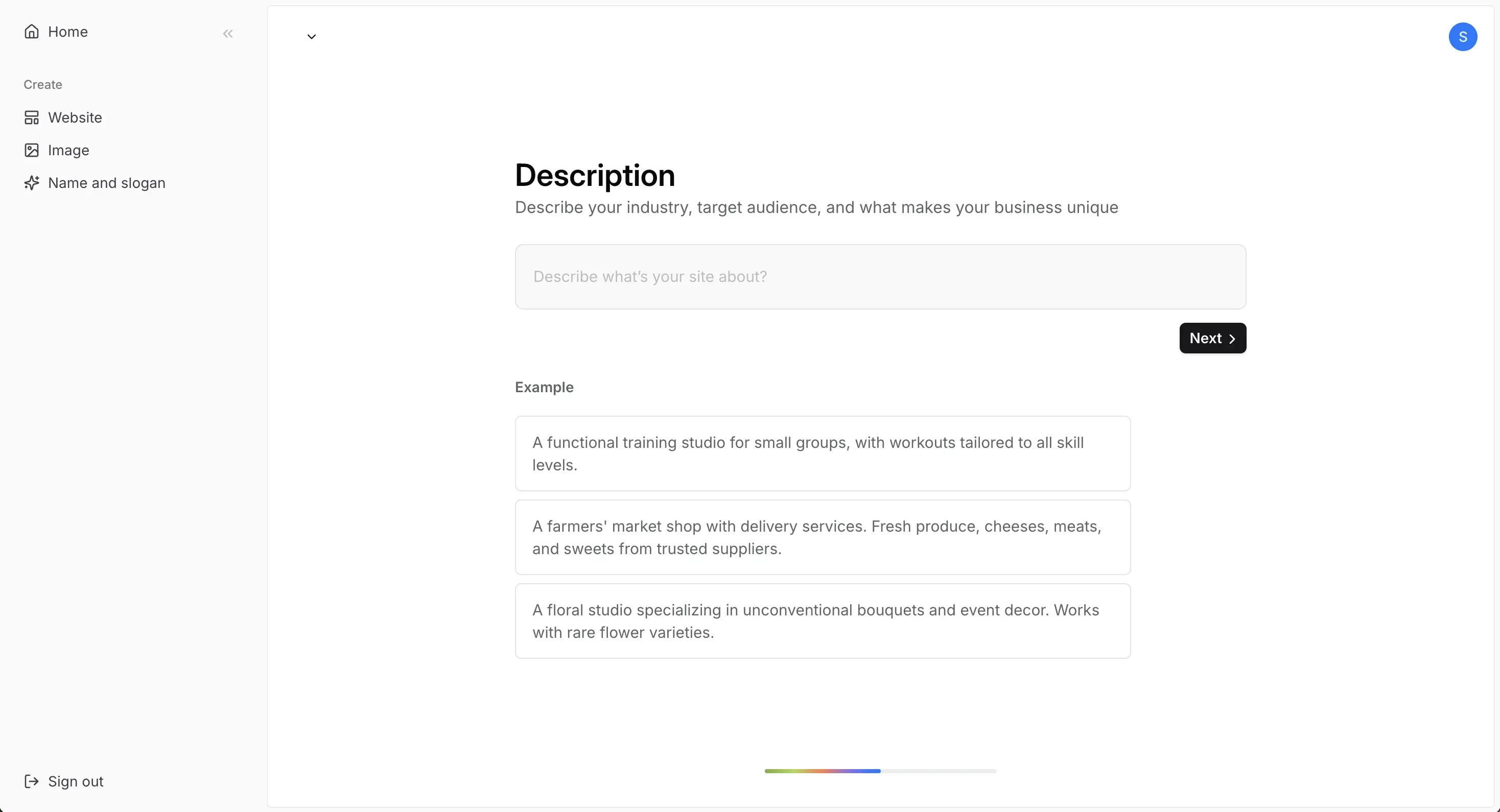
Type in a short prompt, and you’ll get a complete landing page with structure, copy, and images ready to go. From there, you can adjust colours, move sections, or change the text until you’ve got as many variations as you need.
Codesi gives you three essential tools:
- 🔥 AI Landing Page Generator: Create a ready-to-use, one-page website or landing page from a short prompt.
- 🔥 AI Logo Generator: Build consistent brand identity with text-to-logo packs.
- 🔥 AI Image Generator: Generate unique, brand-matched visuals without relying on stock images.
And when it comes to A/B testing, here’s what that means for you:
- Create multiple page versions in minutes
- Keep branding consistent with the built-in logo and image generation
- Publish straight to a free subdomain or your own domain
- Connect your pages to any A/B testing tool and start learning what works
Codesi doesn’t replace A/B testing platforms but makes them more useful. You bring the ideas, our builder gives you pages to test, and the tools show you which one wins.
Ready to see how quick this can be?
Start free with Codesi today and build your first test-ready landing page in minutes.
FAQs
Can I run A/B tests on pages built with other tools?
Yes. As long as your page is live, you can insert a tracking script or use the tool’s editor. Many AI builders let you export or publish variations that integrate with A/B testing platforms.
How long should an A/B test run?
It depends on your traffic. High-traffic pages may only need a week or two. Lower-traffic sites can take a month or more before results are precise.
What should I measure in a landing page test?
Focus on conversions, such as sign-ups, donations, or purchases. Bounce rate and time on page can also give valuable clues.
Create your website with AI today
Codesi is a platform where you can make a website in 3 minutes.
No coding, no designers, no hassle - just AI.